









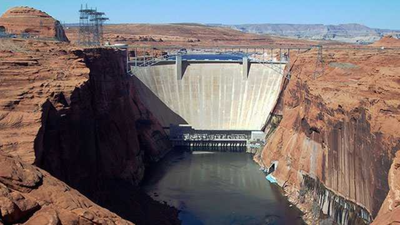
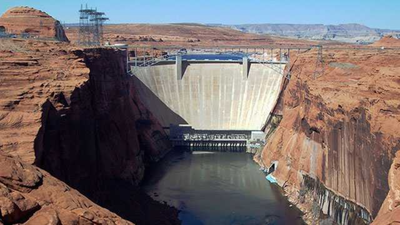
The US government once planned to flood a 40-mile stretch of the Delaware River valley to build a massive reservoir, only to cancel the project and turn the acquired land into a sprawling federal parkland.The Delaware Water Gap National Recreation Area, a 70,000-acre national park spanning Pennsylvania and New Jersey, exists today as the unexpected result of the abandoned Tocks Island Dam project. What began as an ambitious mid-century plan to control floods and generate hydroelectric power ended in 1975, when regional authorities voted to cancel the project, leaving 40 miles of free-flowing river under the National Park Service.
High water and a federal mandate
The push to dam the Delaware River gained national attention in August 1955, when Hurricanes Connie and Diane hit the eastern seaboard one after another. The floods devastated the Pocono region, killing nearly 100 people along Brodhead Creek alone.In response, Congress ordered the US Army Corps of Engineers to review a 1930s plan to build dams and reservoirs throughout the Delaware basin. The main project was planned at the southern tip of Tocks Island.If built, the dam would have created a lake-like reservoir about 40 miles long and a mile wide. Building it required the displacement of around 600 families and property owners whose farms and homes stood in the area that would be flooded.
Evictions, short-term rentals and rising opposition
To clear the valley, the federal government bought properties through eminent domain. Many of the affected residents had lived and farmed there for generations.To recover some of the initial land-buying costs, the Army Corps rented many of the newly acquired properties to short-term tenants. Displaced residents, who had been forced to leave their homes, watched as outsiders moved into the properties they once owned.By the late 1960s, the eviction process became part of wider social changes in the US, including opposition to the Vietnam War, the civil rights movement, and the growing environmental movement. Citizen groups, scientists, educators and regional lawmakers began organising against the federal plan.According to historical summaries from the Delaware Water Gap National Recreation Area, opposition grew alongside major federal laws, including the National Environmental Policy Act, the Clean Air Act, the Clean Water Act, and the Endangered Species Act. What began in 1964 as a few local objections had become a large regional movement by 1971.
- 1964: Early opposition begins
- 1969: National Environmental Policy Act
- 1970: Clean Air Act
- 1971: Public uproar & local protests build
- 1972: Clean Water Act
- 1973: Endangered Species Act
Economic strain and a change of course
Scientific studies carried out during this period questioned the environmental effects of the dam. They warned that the free-flowing river would be turned into a stagnant reservoir. Local officials also raised concerns about the cost of expanding roads and other infrastructure for the millions of tourists expected to visit the proposed recreation area.In 1975, the Delaware River Basin Commission, made up of the governors of the four basin states and a federally appointed commissioner, voted to abandon the Tocks Island Dam project.After the reservoir plan was officially cancelled, the federal government transferred control of the acquired land to the National Park Service. A project originally designed to create a narrow area around an artificial lake became a protected 70,000-acre park with 40 miles of clean, free-flowing river.Although the original plan promised flood control, drought relief, power generation and lake recreation, official reviews found that its overall financial and environmental costs outweighed its benefits. The long-running conflict became an important turning point in US conservation policy and the preservation of public land.

✍️ Vikrant Kharwar
Vikrant Kharwar is the Founder and Editor of News Us Media. He writes about trending news, sports, entertainment, technology, and viral stories. His goal is to make news simple, informative, and easy to understand for readers across the United States and around the world.