








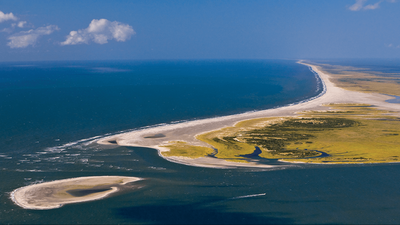
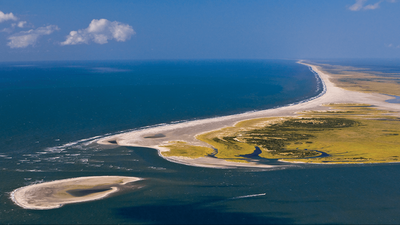
When the federal government began bringing the windswept barrier islands of eastern North Carolina under protected parkland, a quiet property deal near Pamlico Sound helped bring the story of a once-thriving coastal community to an end. In 1967, Henry Pigott agreed to sell his property on Portsmouth Island to help create Cape Lookout National Seashore. As part of the deal, he received a life estate, allowing him to remain in his ancestral home for the rest of his life. The land purchase, recorded in historical narration scripts and administrative records published by the National Park Service (NPS), marked an important step in creating the national seashore. It also made Pigott the last male resident of Portsmouth Village, an isolated 18th-century settlement that was already slowly disappearing.Portsmouth Village was established by the North Carolina Colonial Assembly in 1753 as an important “lightering” port. Heavy ocean-going ships would unload their cargo onto smaller, shallow-draft boats, which could then move through the dangerous inlets of Pamlico Sound. By 1860, the village had grown to nearly 700 residents. But the opening of deeper inlets nearby, powerful hurricanes and changing trade routes led to a steady decline during the 20th century. The closure of the local United States Life-Saving Station in 1937 and the post office in 1959 further weakened the island’s connection to the mainland economy. By the mid-1960s, only a small number of elderly residents were left on the roadless island. One of them was Pigott, a Black mail carrier, guide and craftsman who was born there in 1896. His grandmother had lived on the island during slavery, and Pigott spent his entire life closely connected to the village and its people.
Life estate allowed Pigott to stay
When federal agencies began buying property across the Core Banks to create Cape Lookout National Seashore, Pigott agreed to sell his 1902 yellow wooden house while keeping the right to live there for the rest of his life. The arrangement allowed the government to acquire the land for conservation while ensuring that long-time residents were not forced to leave their homes. NPS records show that Pigott remained an important part of the shrinking community during his final years. He looked after his home, carried mail and supplies across the water, helped hunters, carved waterfowl decoys and checked on the village’s only other full-time residents, Marian Gray Babb and Elma Dixon. Historical records compiled by the Friends of Portsmouth Island and the NPS say Pigott died in January 1971. His death brought permanent life in the historic settlement to an end. Without Pigott there to support them, the two remaining women left for the mainland later that year. Portsmouth Village was left completely empty for the first time in more than 200 years.
Historic village preserved
After the island was fully depopulated, the 250-acre Portsmouth Village historic district was added to the National Register of Historic Places in 1978. The National Park Service later preserved more than 20 historic buildings, turning the abandoned village into a living museum of coastal and maritime history. The Henry Pigott House remains one of the main historic sites in the village. Through preservation work by the National Park Service and the Friends of Portsmouth Island volunteer organisation, the house has been repaired, protected from the weather and furnished with period-appropriate objects. Inside, visitors can see original belongings that belonged to Pigott and his sisters. Exhibits also explain his role as the village’s final male resident.The house has faced damage from major storms over the years. Hurricane Dorian in 2019, for example, caused serious interior damage. Cleanup work and window replacement projects helped protect the building and allowed it to continue serving as an educational site for visitors arriving by ferry or private boat. Today, Portsmouth Village can only be reached by water and remains part of the wider Cape Lookout National Seashore. Its quiet roads and preserved buildings offer a physical reminder of the barrier island communities that once shaped the Outer Banks before population decline, changing trade and conservation transformed the landscape. Pigott’s decision to sell his home while keeping the right to live there also became part of that history. His death marked the final chapter of permanent settlement in a village that had survived for more than two centuries.

✍️ Vikrant Kharwar
Vikrant Kharwar is the Founder and Editor of News Us Media. He writes about trending news, sports, entertainment, technology, and viral stories. His goal is to make news simple, informative, and easy to understand for readers across the United States and around the world.