





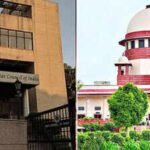





Life Insurance Corporation (LIC) of India has been ordered to pay Rs 60 lakh cumulatively after a woman’s claim was rejected following her son’s death. The National Consumer Disputes Redressal Commission has directed LIC to pay more than Rs 60 lakh in life insurance proceeds to a Mumbai woman after concluding that the insurer had not been justified in repudiating all five policies purchased by her son, who died of cardiac arrest in 2013.The decision ends a legal dispute that continued for more than a decade. It also establishes that an insurer cannot deny a death claim for non-disclosure of a medical condition if the policyholder himself was unaware of the disease when the policy was taken.
What the LIC insurance payout dispute was about:
The case dates back to June 2010, when Nitin Suresh Gambhir, who lived in Mahim, Mumbai, submitted proposals to LIC for five life insurance policies. As part of the process, he underwent a medical examination by a doctor from LIC’s own panel.Three of the policies commenced on 26 August 2010, with the risk also beginning on that date. Their respective sums assured were Rs 10 lakh, Rs 15 lakh and Rs 15 lakh.The other two policies carried a sum assured of Rs 10 lakh each. The family said that the first premium for these policies was paid on 7 September 2010. LIC subsequently maintained that it had received the first premium only on 13 September 2010 and, on that basis, treated that date as the commencement of risk.On 11 September 2010, the family said four days had passed since it paid the premium for the final two policies when Nitin was admitted to P.D. Hinduja National Hospital in Mumbai.He was hospitalized because of a wound on his right leg that had remained unhealed for 15 days.During the hospital stay, medical records described Nitin as a known diabetic for two months. The records also stated that he had been taking a hypoglycaemic agent. He received treatment and was discharged from the hospital on 13 September 2010.Almost three years later, on 11 June 2013, Nitin died following a cardiac arrest.Following Nitin’s death, his mother, Jayshree Suresh Gambhir, submitted claims under each of the five life insurance policies. LIC rejected all five claims in a repudiation letter issued on 11 July 2014, according to an ET report.The insurer alleged that Nitin had failed to disclose important information about his health while filling out the proposal form. LIC relied on the discharge summary issued by Hinduja Hospital, which recorded that Nitin had been diabetic for two months as of September 2010. On this basis, the insurer contended that the disease must have been present around June 2010, when the insurance proposals were submitted.LIC further pointed out that Nitin had answered “no” to questions in the proposal form relating to diabetes and previous hospitalisation. The insurer argued that this amounted to a breach of the principle of utmost good faith and rendered the policies void.
Family’s case
Jayshree then took the matter to the Maharashtra State Consumer Disputes Redressal Commission. After reviewing the documents and the relevant dates, the state commission treated the five policies differently.In the case of the first three policies, the commission noted that the risk had begun on 26 August 2010. Nitin’s hospitalisation, meanwhile, took place on 11 September 2010, meaning he was admitted only after these policies had already come into force. The commission therefore allowed the claims relating to these three policies.The position was different for the remaining two policies. The state commission accepted LIC’s contention that the first premium for these policies had been received on 13 September 2010, the date on which Nitin was discharged from the hospital.As the hospitalisation occurred during the period between the premium payment and the commencement of risk, the state commission agreed with LIC’s decision to reject the claims under these two policies.Neither side accepted the outcome. LIC challenged the state commission’s decision allowing the claims under the first three policies, while Jayshree appealed against the rejection of the remaining two.Both appeals subsequently came before the National Consumer Disputes Redressal Commission.
What the National Consumer Disputes Redressal Commission found
The bench, headed by Presiding Member Dr. Inderjit Singh and Member Shashi Nandkeolyar, reviewed the matter from the outset and ultimately ruled in favour of the family on all five policies.On the question of whether Nitin had failed to disclose his diabetes, the commission found that LIC had not produced any medical records establishing that he was suffering from diabetes, or even knew that he had the condition, before signing the proposal form on 27 June 2010.Although the September 2010 hospital discharge summary stated that he had been diabetic for two months, the commission held that this reference by itself could not establish that Nitin was aware of the disease when he completed the proposal form.The commission also considered another medical record from February 2013, only a few months before Nitin died. That record described him as non-diabetic, further weakening LIC’s argument regarding the alleged non-disclosure.The commission also examined the circumstances surrounding Nitin’s death. He died from cardiac arrest in June 2013, almost three years after he had been hospitalised for the leg wound. According to the commission, there was no connection established between the cellulitis in his leg and the cardiac arrest. LIC had also failed to establish such a link.
The dispute over the premium date
The key issue in deciding the claims under the final two policies was the actual date on which LIC received the first premium.LIC relied on two documents described as First Premium Receipts, both carrying the date 13 September 2010. The commission, however, observed that these receipts did not establish the date on which LIC actually received the premium. They only showed the date on which the receipts were issued.Jayshree, on the other hand, submitted two Proposal Deposit Receipts, both dated 7 September 2010. These documents specifically recorded that Rs 40,100 had been received as premium in each case.After comparing the documents, the commission considered the Proposal Deposit Receipts more reliable. It concluded that LIC had received the first premium for both policies on 7 September 2010, four days before Nitin was admitted to hospital.The proposal form required the policyholder to inform LIC about any adverse change in health occurring between submission of the proposal and receipt of the first premium. Since the first premium had already been received before Nitin’s hospitalisation in the case of all five policies, the commission held that he was not required to provide such information for any of them.The national commission therefore agreed with the state commission’s decision to allow the claims under the first three policies, but found that the state commission had erred in rejecting the claims relating to the other two.
What LIC has been ordered to pay
LIC has been ordered to pay Rs 60 lakh towards the sum assured under all five policies. This includes Rs 10 lakh under each of three policies and Rs 15 lakh under each of the remaining two.The Rs 1 lakh compensation awarded by the state commission for mental agony has also been upheld. In addition, total litigation costs have been fixed at Rs 50,000. This takes the total payout ordered to Rs 61.5 lakh, before the applicable interest.Interest will be payable on all these amounts at 9 per cent per annum from the date LIC repudiated the claims in July 2014 until the payment is made in full.

✍️ Vikrant Kharwar
Vikrant Kharwar is the Founder and Editor of News Us Media. He writes about trending news, sports, entertainment, technology, and viral stories. His goal is to make news simple, informative, and easy to understand for readers across the United States and around the world.