









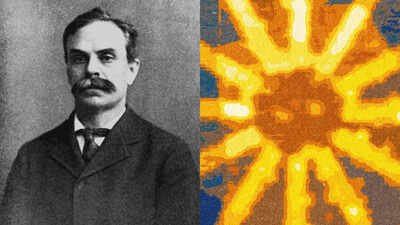
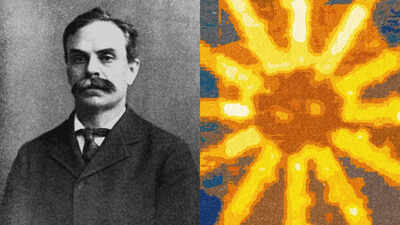
For more than a century, the Hall effect has been taught with a simple picture that electricity flows through a material, a magnetic field pushes the moving charges sideways, and a voltage appears across the material. Now, scientists have found a way to make that familiar phenomenon work in a direction once thought impossible. According to a report published on Science Daily, researchers at Carnegie Mellon University have demonstrated an unusual form of the Hall effect in which a magnetic field lying within the plane of a material can produce a measurable Hall response. The discovery, published in Nature Materials, challenges a long-standing assumption in condensed-matter physics and could eventually lead to simpler magnetic sensors capable of detecting fields along multiple directions. According to the online report, Edwin Hall discovered the Hall effect in 1879. In the conventional setup, a magnetic field is applied perpendicular to a material carrying an electric current. The field deflects moving charges, creating a voltage that can be measured across the material. That voltage can reveal valuable information about the material, including the type and concentration of charge carriers and how readily they move. The principle has since become part of everyday technology. Hall-effect sensors are used in applications ranging from automobiles and keyboards to industrial electronics. But Carnegie Mellon researchers working in the Lab for Investigating Quantum Materials, Interfaces and Devices (LIQUID) have now shown that the response does not have to be restricted to the traditional geometry.
Turning a theoretical prediction into reality
Scientists had previously predicted an in-plane anomalous Hall effect, but demonstrating it experimentally proved difficult. The challenge was finding a material system with precisely the right symmetry. The team began with tantalum iridium telluride (TaIrTe₄), a two-dimensional quantum material whose crystal structure can support the unusual response. Researchers reduced it to only a few atomic layers and placed it alongside a magnetic material called chromium germanium telluride (Cr₂Ge₂Te₆), or CGT. Because the two layers sit extremely close together, the magnetic layer transfers its influence to the normally nonmagnetic TaIrTe₄. The result is an atomically thin device with specially engineered electronic and magnetic properties.
One device, multiple magnetic directions
Inside the resulting structure, researchers detected the familiar Hall signal as well as a second, unconventional signal associated with magnetization lying within the material’s plane. That could have significant implications for magnetic sensing. Instead of requiring separate sensors to measure magnetic fields along different axes, a single ultrathin device could potentially detect multiple directions. The researchers say this could enable new forms of vector magnetometry, with applications in electronics, transportation and medical imaging.
Why the unusual effect appears
The experimental work was accompanied by theoretical modeling to understand the physics behind the discovery. Researchers found that combining the two materials reduces the system’s symmetry and enables additional spin-orbit coupling at their interface. These interactions become important when CGT becomes ferromagnetic at low temperatures, helping produce the in-plane anomalous Hall response. However, the precise microscopic mechanism is not yet fully settled, and further characterization of few-layer TaIrTe₄ is needed.
What comes next?
The Carnegie Mellon team is now looking for other combinations of two-dimensional materials that could produce the same effect. Another major goal is determining whether the devices can operate at room temperature.That step will be crucial for any practical technology.For now, the discovery expands the possibilities of a phenomenon first identified nearly 150 years ago — showing that even one of physics’ most familiar effects can still have a few surprises hidden in it.Images Credit: Carnegie Mellon and Wikipedia

✍️ Vikrant Kharwar
Vikrant Kharwar is the Founder and Editor of News Us Media. He writes about trending news, sports, entertainment, technology, and viral stories. His goal is to make news simple, informative, and easy to understand for readers across the United States and around the world.