










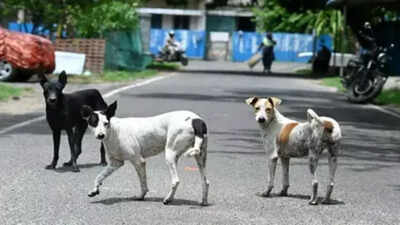
NEW DELHI: While Chile and Bhutan have recently demonstrated that dog-mediated human rabies can be eliminated as a public health threat, India may struggle to meet its own 2030 elimination target, public health experts have warned. They cited the country’s huge burden of dog bites, uneven implementation of dog vaccination and population management programmes, and gaps in surveillance as key challenges.Chile recently became the first country in South America to receive World Health Organization validation for eliminating dog-transmitted rabies, after more than five decades without a human case transmitted by a dog. Bhutan became the first country in the WHO South-East Asia Region to receive the same validation earlier this month.Both countries achieved the milestone through sustained dog vaccination, population management, surveillance, laboratory testing and access to timely post-exposure treatment, offering India a model but also highlighting the scale of effort required.The World Health Organization estimates that 9.1 million animal bites occur in India every year, with more than three-quarters caused by dogs. An Indian Council of Medical Research-National Institute of Epidemiology estimate puts annual human rabies deaths at around 5,726.India’s National Action Plan for Dog-Mediated Rabies Elimination focuses on mass dog vaccination, population management, surveillance, public awareness and timely post-exposure treatment. However, experts said the challenge lies in translating these measures into sustained action across districts.“Achieving the 2030 target will be difficult, but possible with district-level planning and coordinated action. Annual vaccination of stray dogs, effective animal birth control and dedicated spaces for strays are essential. Simply capturing them does not solve the problem,” said an expert on condition of anonymity.Dr Anil Kumar Gupta of the Association for Prevention and Control of Rabies in India and the Indian Public Health Association said the target may not be realistic at the current pace. He stressed mass dog vaccination, population management, proper wound care and timely post-exposure vaccination, while also flagging concerns over counterfeit rabies vaccines. “Never ignore a bite, even a scratch or lick,” he said.Dr Sumit Mor, Consultant & Head, Trauma & Emergency, Aakash Healthcare, said India could draw important lessons from Chile and Bhutan. “India can learn from Chile and Bhutan that rabies elimination needs sustained action, not one-off campaigns. We need dog vaccination above 70% year after year, stronger sterilisation and surveillance, mandatory case reporting, and free, uninterrupted post-exposure prophylaxis at every primary health centre.
Share your thoughts in the comments
Be respectful · TOI community guidelines
With coordinated action and sustained political commitment, the 2030 target remains within reach,” he said.The anonymous expert also pointed to competing interests around rabies control, saying a sharp fall in dog bites could affect demand for anti-rabies vaccines and rabies immunoglobulin.

✍️ Vikrant Kharwar
Vikrant Kharwar is the Founder and Editor of News Us Media. He writes about trending news, sports, entertainment, technology, and viral stories. His goal is to make news simple, informative, and easy to understand for readers across the United States and around the world.