









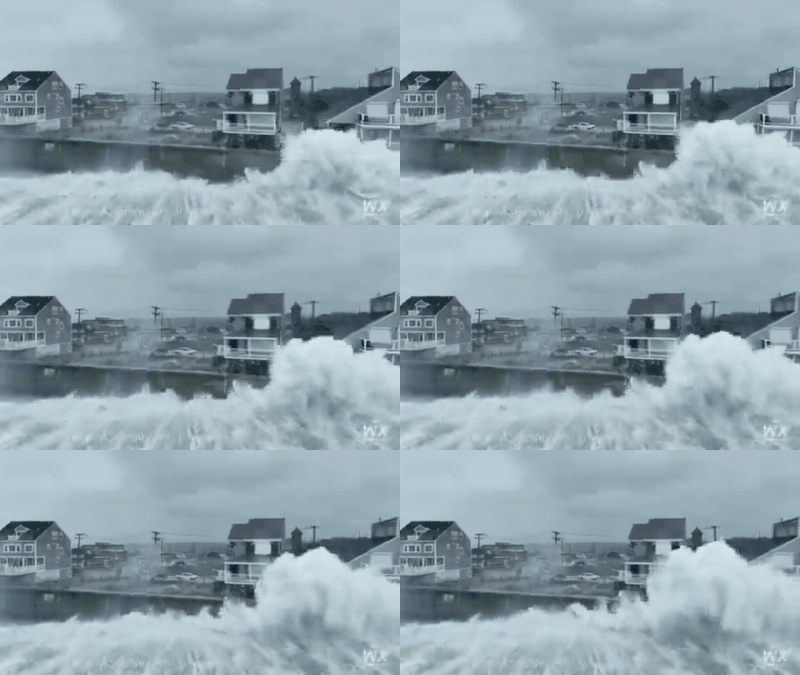
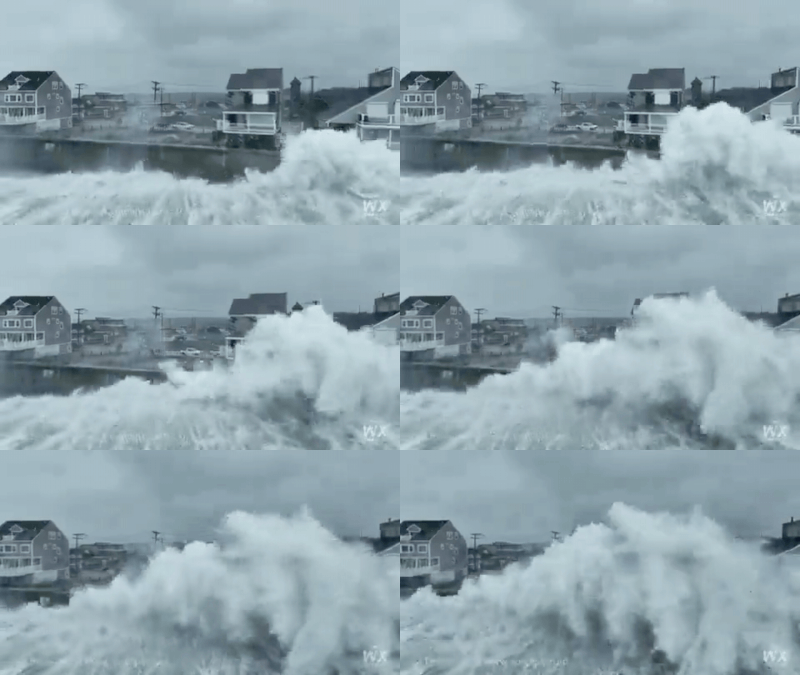
America’s east coast is under a torrential attack as a powerful nor’easter is hammering the US East Coast, bringing heavy rain, strong winds, dangerous surf and coastal flooding from the Mid-Atlantic to New England.More than 100,000 homes and businesses lost power at one point as the storm knocked down trees, branches and power lines across the region. More than 88,000 customers remained without electricity in New Jersey, Connecticut, New York and Pennsylvania as of Saturday afternoon.The storm has also disrupted travel, with around 425 flights cancelled and more than 1,300 delayed across US airports, according to FlightAware.The National Weather Service warned that the storm could continue bringing coastal flooding, rip currents, strong wind gusts and heavy rain through Monday. The biggest threat was expected along coastal and bayside communities, where exceptionally high tides could send water onto roads and into homes and businesses.In New Jersey and New York, flooded streets became so deep that some residents took to kayaks. Along the coast, powerful waves battered beaches, eroded dunes and damaged property.In Surf City, New Jersey, water is rising inside houses as people’s belongings also get displaced by the strong forces of wind and rain.In Ocean City, Maryland, heavy surf eroded beaches and washed away dune fencing. In Norfolk, Virginia, flooding left vehicles struggling through waterlogged roads.The disruption extended well beyond homes and roads. Flights were cancelled, sporting events were rescheduled and concerts and festivals were called off as the storm moved slowly along the coast.
What is a nor’easter?
A nor’easter is a powerful storm that develops along or near the US East Coast, typically moving northeastward while drawing energy from the contrast between cold air to the north and warmer, moist air to the south and over the Atlantic.The storms get their name from the northeasterly winds that can batter the coast as the system strengthens.They can bring a dangerous combination of heavy rain, powerful winds, coastal flooding and huge waves. Heavy rainfall can overwhelm drainage systems and worsen inland flooding, while strong gusts can bring down trees, damage buildings and snap power lines. High tides, combined with storm-driven water, can push seawater onto roads and into coastal communities. Meanwhile, prolonged strong winds can whip up dangerous surf and accelerate beach and dune erosion.This storm is particularly threatening because it is slow-moving. That means coastal areas can remain exposed to strong winds, waves and high water for a prolonged period rather than getting a quick hit and recovery.
What is triggering this nor’easter?
The immediate ingredients are the storm’s atmospheric setup, strong winds, moisture and the temperature contrasts that help nor’easters intensify.But there is a bigger climate pattern in the background: El Niño.El Niño is a natural cycle in the tropical Pacific in which unusually warm ocean temperatures alter atmospheric circulation far beyond the Pacific.This year’s El Niño is particularly strong. Its effects are being felt across the US, although scientists stress that it does not directly cause every individual storm.For the Northeast, El Niño can shift the Pacific jet stream southward. That atmospheric pattern can help provide energy and moisture for storms forming off the southeastern US before they move north along the East Coast.Nor’easters also appear to occur more frequently during El Niño years, according to a New York Times report.
What happens next?
For the East Coast, the immediate concern remains water and wind.The highest tides were expected north of Atlantic City from Saturday night into Sunday, raising the risk of widespread flooding in coastal and bayside communities.Tens of millions of people remained in the storm’s path, while emergency agencies prepared for further outages and flooding.And while nor’easters are a familiar part of the Northeast’s colder months, forecasters said this storm arrived somewhat earlier than usual for a system of this strength.El Niño is also expected to influence other weather patterns through the coming months, researchers are currently keeping an eye on what they should expect next.

✍️ Vikrant Kharwar
Vikrant Kharwar is the Founder and Editor of News Us Media. He writes about trending news, sports, entertainment, technology, and viral stories. His goal is to make news simple, informative, and easy to understand for readers across the United States and around the world.