









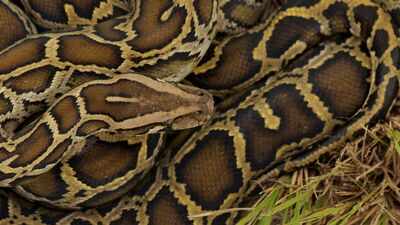
Burmese python males in South Florida undergo a marked seasonal change in testosterone as the breeding period approaches, while another hormone linked to stress and energy use follows a less predictable pattern. A study published in General and Comparative Endocrinology tracked testosterone and corticosterone in free-ranging male Burmese pythons to examine how their hormone levels change across the year. The researchers found that testosterone rises before breeding, and then falls steadily, while corticosterone varies more widely during the breeding period without showing the same clear seasonal cycle.
How does testosterone change before Burmese python breeding
The clearest shift involved testosterone, a hormone closely associated with male reproduction. According to the study, testosterone increased as the breeding period approached and reached its highest levels in November, just before breeding began. It then declined through the breeding season before returning to baseline levels during the non-breeding months.That timing is important because it suggests that the hormonal preparation for reproduction begins before the main breeding period itself. The researchers describe November as a distinct pre-breeding period, refining the way the reproductive cycle of male Burmese pythons can be understood.The study also found a strong relationship between testosterone and day length. As the days became shorter towards winter, testosterone increased. Day length was negatively associated with testosterone in the researchers’ best-supported seasonal model, making the changing amount of daylight one of the strongest environmental clues linked to the hormone cycle.
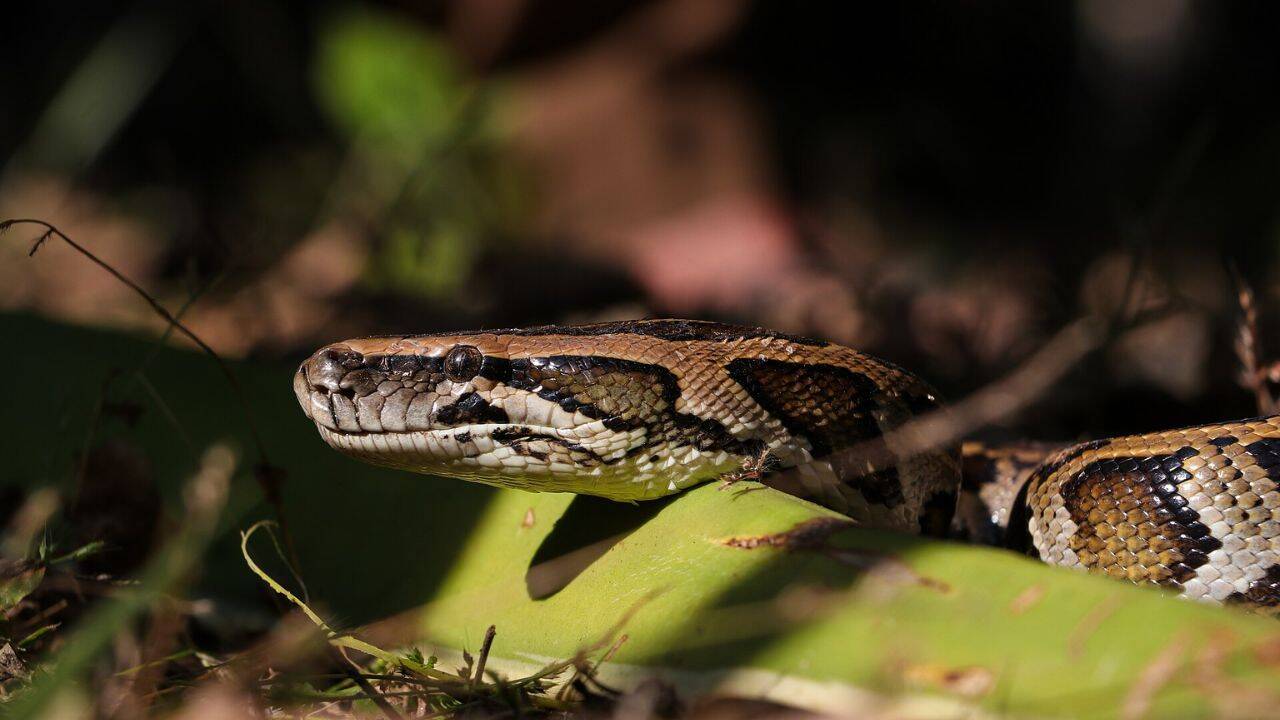
Burmese python. Image Credit: Wikipedia
What did the Florida snake study measure
The researchers followed free-ranging adult male Burmese pythons in South Florida rather than relying only on captive animals. They collected samples throughout the year from September 2019 to October 2024, gathering 110 samples from 79 individual snakes. Most of the sampling took place in Big Cypress National Preserve, with additional snakes coming from public and private lands in south-west Florida.The researchers measured two hormones, testosterone and corticosterone. They also considered factors that could help explain changes in hormone levels, including body condition, month, average daily temperature, day length and the time between capture and blood collection. This allowed the study to separate broader seasonal patterns from short-term effects associated with capturing the snakes.The work was designed to address a gap in knowledge about the reproductive biology of an invasive population. Although Burmese pythons have been established in South Florida for more than two decades, the researchers noted that their reproductive physiology remains incompletely understood.
Difference in the levels of corticosterone
Corticosterone did not follow the same neat seasonal pattern as testosterone. The study found no clear annual trend in corticosterone, although levels varied more during the breeding season. Post-hoc comparisons showed that corticosterone was higher during breeding months from November through March, while its lowest levels were recorded in September. Its numerical peak occurred in July, meaning its pattern did not simply rise and fall alongside reproduction.Temperature provided another important clue. The researchers found a negative relationship between average temperature and corticosterone, meaning corticosterone tended to be higher when temperatures were lower. The best-supported model during the reproductive season included body condition, average temperature and the time taken to collect blood.The time taken to collect blood mattered because capture itself can affect corticosterone. By including this factor in their analysis, the researchers could better distinguish the immediate response to capture from the snakes’ underlying hormone levels.
What does the hormone cycle reveal about winter breeding
The combined results point to a distinctive reproductive rhythm in South Florida. The researchers established that Burmese pythons are winter breeders, with reproductive preparation building as daylight decreases and temperatures fall. Testosterone reaches its peak in November, followed by breeding from early December into mid-March.The study also connects this timing with the environmental conditions of South Florida. The researchers suggest that the snakes may be responding to seasonal cues resembling those associated with the dry season in their native range. In South Florida, breeding begins around November, while egg laying begins in May and hatchlings emerge from July to October.For male pythons, this seasonal preparation is also linked to reproductive behaviour. During the breeding period, males increase their movements while searching for females and can form breeding groups. The hormone results provide a clearer physiological picture of the period when these behaviours occur.The study notes that current removal methods can be labour-intensive and expensive, while some approaches rely on males locating reproductive females. Understanding physiological signs associated with mate-searching could contribute to more targeted management methods.The researchers also stress that the hormone picture is not complete. They point to other parts of the reproductive system that have not yet been fully examined, including hormones involved in regulating the reproductive pathway and metabolic hormones.

✍️ Vikrant Kharwar
Vikrant Kharwar is the Founder and Editor of News Us Media. He writes about trending news, sports, entertainment, technology, and viral stories. His goal is to make news simple, informative, and easy to understand for readers across the United States and around the world.