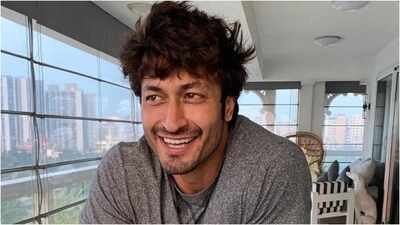











Saif Ali Khan and Soha Ali Khan‘s sister Saba Pataudi, has largely been away from the limelight despite being from a film family. In a rare appearance, she has opened up about being diagnosed with a brain tumour at the age of 27 after suddenly fainting without any prior symptoms. During a conversation with Soha on her podcast, Saba recalled how an MRI scan revealed a shadow in the third ventricle of her brain. Doctors initially suspected a colloid cyst, but she was diagnosed with a benign brain tumour called pilocytic astrocytoma after undergoing surgery around six months later.Saba also spoke about the emotional turmoil that followed the diagnosis, her decision to undergo surgery without further delay and her search for the right surgeon. Reflecting on why she chose to share her experience publicly, she said personal stories can encourage others to seek medical advice and help them find answers to health concerns they may otherwise hesitate to discuss.Recalling the day everything changed, Saba said the episode came without any warning signs. Given her history of stomach sensitivity, she initially assumed that something she had eaten or drunk had made her unwell.“It happened very suddenly. I didn’t have any pre-symptoms or any conditions that I think led up to it. One day, I went out and thought the problem was with my stomach, which has always been a sensitive point for me. I thought I had eaten or drunk something that hadn’t agreed with me. I suddenly fainted.”She explained that she had previously associated fainting with a drop in blood pressure or exposure to bright lights. However, this time, she experienced a sudden blackout while she was out with a friend.“I could feel myself becoming very uncomfortable, so I turned to a friend and said, ‘I don’t think I’m quite okay. Maybe we should head home.’ We were about to go out, but suddenly everything went blank. When I regained consciousness, I had already fallen on the road, just outside the building.”Saba said she was still struggling to comprehend what had happened when she lost consciousness again. It took her some time to regain her awareness fully.“I turned to my friend again and said that we had to head back because I definitely wasn’t okay. It took me about 20 to 25 minutes to feel more conscious. Even then, I was still a little hazy, and my awareness hadn’t completely settled.”Following the incident, Saba underwent an MRI scan that revealed a shadow in the third ventricle of her brain. Doctors initially believed it could be a colloid cyst, a growth that can sometimes obstruct the flow of cerebrospinal fluid. She underwent surgery approximately six months after the scan, following which doctors identified the growth as a pilocytic astrocytoma, a type of brain tumour generally considered low-grade and slow-growing.Looking back at the diagnosis, Saba said she had never imagined that she would face such a medical crisis at such a young age, particularly when she had experienced no apparent warning signs.“It was something completely unexpected that happened to me at the age of 27, without any warning.”Saba admitted that being told she needed brain surgery was overwhelming. The diagnosis abruptly changed her life, leaving her to process the possibility of a serious medical procedure when she had felt perfectly fine until then.“Your life suddenly goes numb because nothing feels normal after that. One day, you’re fine, and the next day, you’re told that you’re going to have brain surgery. It’s not something as simple as having your appendix removed. It shatters you in a way, but it also empowers you because you have to deal with it.”She also recalled experiencing intense emotions as she tried to come to terms with the news, sometimes breaking down without understanding why.“I realised that I was very emotional. I would suddenly find myself crying without knowing why. You are trying to process news that you never expected to receive. What happened to me came with absolutely no warning.”As she and her family began exploring treatment options, Saba said finding the right surgeon became a priority. She also spoke about her fears surrounding the possibility of losing her independence and having to rely on others for her everyday needs.“I didn’t want to be dependent on anyone. I didn’t want to become a vegetable. I didn’t want to be in a position where someone had to take care of me.”Saba revealed that doctors had initially told her that the suspected colloid cyst was slow-growing and that she could wait for up to two years before undergoing surgery. However, having fainted twice, she was uncomfortable with the possibility of another episode and did not want to delay treatment.“When they diagnosed it as a colloid cyst, they said it was slow-growing and that we could wait for two years. But the fact that I had fainted twice made me uncomfortable. I didn’t want to take the chance of suddenly fainting again and not waking up.”During the surgery, doctors discovered that the growth was a tumour attached to an area associated with her short-term memory. The surgical team removed as much of it as possible while avoiding the risk of further damage.Saba also recalled a conversation with her doctor about whether additional treatment might be required. When he mentioned radiation as a possible option, she wondered why everything could not be addressed during the same course of treatment.“I asked the doctor, ‘What would you do if you had to any further?’ He said radiation was an option. I asked him, ‘Why don’t we just do everything while I’m here?’ Amma looked at me and said, ‘What’s with her?’ I just wanted to finish it. I didn’t want anything left behind.”However, her doctor explained that further treatment would only be considered if it was medically necessary.“He looked at me very calmly and said, ‘We don’t do anything until it’s necessary. We won’t give you radiation just because you’ve asked for it.’”Saba also opened up about her decision to speak about such a personal and challenging chapter of her life. She said sharing individual experiences can help others recognise that they are not alone and encourage them to seek the right guidance when faced with similar concerns.“I feel that when we share our experiences, we never know who might relate to them or find answers in the stories we tell. A lot of people might feel more confident about approaching the right people because there are so many things we shy away from. We may feel self-conscious, not want to talk about them or worry that people will judge us differently. But when you share your experiences, you often find that the information you provide can help others. It might even help someone else find a solution.”

✍️ Vikrant Kharwar
Vikrant Kharwar is the Founder and Editor of News Us Media. He writes about trending news, sports, entertainment, technology, and viral stories. His goal is to make news simple, informative, and easy to understand for readers across the United States and around the world.