









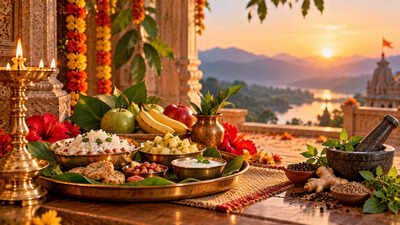
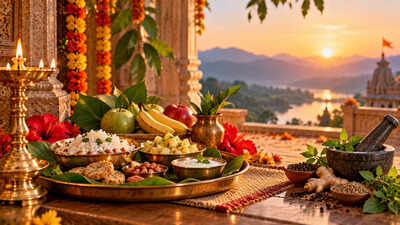
If you’ve got Hindu friends or coworkers, you may have noticed something in October. Suddenly they’re skipping the office pizza. Lunch is a box of fruit, or something made with a flour you’ve never heard of. Ask why, and the answer is usually short: “It’s Navratri.”The nine-day festival, running from October 11 to 19 in 2026, is a time of devotion to the goddess Durga. Fasting is part of that devotion. But there’s also an older, practical layer underneath. Ayurveda, India’s traditional system of medicine, has a lot to say about why this particular time of year is a smart moment to eat lightly.
A Season Built for a Reset
Ayurveda divides the year into six seasons, not four. Navratri in autumn falls in Sharad Ritu, the season right after the monsoon.According to Ayurveda, the monsoon months weaken digestion. The air is damp, the body feels sluggish, and the digestive fire, called agni, burns low. Then autumn arrives with bright sun and sudden heat. That shift is said to aggravate Pitta, the dosha linked with heat, acidity and inflammation.So the body is in an awkward spot. Digestion is still recovering, and heat is building inside. Heavy, oily or spicy food at this stage is believed to cause trouble.
Why the Changeover Matters
Ayurvedic texts pay close attention to the junction between two seasons. They call it ritu sandhi. The classical advice is to adjust diet gradually during these weeks, letting go of old habits and easing into new ones.Navratri lands almost exactly on this junction. Nine days of simple eating gives the stomach a break right when it needs one. There’s a reason grandmothers across India insisted on it long before anyone used the word “detox.”Interestingly, the spring Navratri in March or April falls near another seasonal junction. Two fasting festivals, two changes of season.
What People Actually Eat
Navratri fasting rarely means eating nothing. Most people follow a vrat diet, which swaps everyday grains for lighter alternatives.Common choices include:·Kuttu atta, buckwheat flour, used for puris and pancakes. Despite the name, buckwheat isn’t wheat at all. It’s naturally gluten-free.·Singhara atta, made from water chestnuts.·Rajgira, also called amaranth.·Samak rice, a small millet that cooks like rice.·Sabudana, tapioca pearls, often made into khichdi with peanuts.·Makhana, roasted fox nuts, a favourite crunchy snack.Fruits, milk, yoghurt, potatoes and pumpkin show up a lot too. Regular salt is replaced by sendha namak, a mineral-rich rock salt considered purer for fasting.What’s left out? Wheat, rice, lentils, onion, garlic, meat and alcohol.
The Onion and Garlic Question
This one surprises a lot of people. Onion and garlic are perfectly healthy vegetables, so why skip them?Ayurveda and yoga sort food by its effect on the mind. Sattvic foods are calming and clear. Rajasic foods stimulate. Tamasic foods dull the senses. Onion and garlic are traditionally seen as rajasic and tamasic. They’re thought to heat the body and stir up restlessness, which works against meditation and prayer.During a nine-day spiritual practice, the goal is a quieter mind. So they’re set aside.
More Than Health
It’s worth saying clearly: for most Hindus, Navratri fasting is first an act of devotion. Giving up certain foods is a way of offering discipline to the goddess. Many people break the fast only after Kanya Pujan, a ritual honouring young girls as forms of Durga.The Ayurvedic logic simply explains why the tradition fits the season so well. Faith and practicality end up pointing the same way.
Thinking of Trying It?
You don’t need to fast for nine days to borrow the idea. Try one lighter meal a day during Navratri week. A bowl of sabudana khichdi or a kuttu pancake with yoghurt makes a good start. Many Indian grocery stores stock these flours in October.And go gently. People with diabetes, low blood pressure, pregnancy or other health conditions should talk to a doctor before changing how they eat. Traditional fasting has always made room for those who can’t fast fully.

✍️ Vikrant Kharwar
Vikrant Kharwar is the Founder and Editor of News Us Media. He writes about trending news, sports, entertainment, technology, and viral stories. His goal is to make news simple, informative, and easy to understand for readers across the United States and around the world.