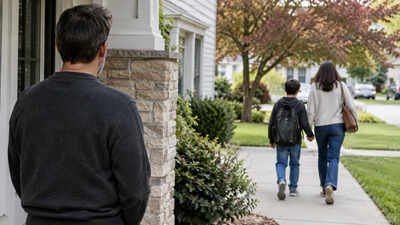











A Virginia couple who transformed the gravel backyard of their century-old home into a garden for their two toddlers have found themselves caught in a property-boundary dispute after a neighbouring property owner claimed part of the land belonged to him. Brittany Ellerbe and her husband bought the house in Petersburg in 2025 and turned the outdoor space into a garden with grass, flowers and vegetable beds. About a year later, the dispute escalated when workers arrived to remove part of their fence at the request of the neighbouring property’s seller. The couple challenged the move in court, and a judge subsequently ordered that the fence could not be removed or relocated while the legal dispute continued.
How a backyard makeover led to a dispute
When Brittany Ellerbe and her husband bought their home on South Dunlop Street in Petersburg, Virginia, the backyard was largely covered in gravel. The couple gradually transformed it into a garden, adding grass, fencing and vegetable beds where they grew flowers, zucchini, squash and bush beans.The garden also gave the family, which includes two toddlers, a private outdoor space. But the transformation became the centre of a dispute about a year after they purchased the property.According to a report by local broadcaster 12 On Your Side, a realtor representing the seller of a neighbouring house on Wilcox Street told Ellerbe that part of the backyard, including an area near the couple’s steps, belonged to his client. The realtor reportedly said part of the fence would have to be removed so the neighbouring property could be sold.
Workers arrive to remove part of the fence
Ellerbe told 12 On Your Side that the couple received no further communication for months before the seller arrived with a truck carrying workers who began removing part of the fence.The couple subsequently received a letter from an attorney and a land survey showing boundary lines. Part of the removed fencing was reportedly used to enclose another section of the neighbouring property.The incident prompted the couple to seek legal help. Ellerbe said they had not received a physical survey, a deed or a letter from an attorney before the fence was removed.The dispute centres on whether the contested section of the backyard legally belongs to the couple or the neighbouring property owner. The available reporting has not established that either side has conclusively proved its claim.
A judge intervenes in the boundary dispute
After hiring a lawyer, the couple obtained a court order in early October 2026. According to 12 On Your Side, a Petersburg judge granted an injunction and a temporary restraining order preventing the fence from being removed or moved until November 19, 2026.The order temporarily restricts further changes to the fence while the dispute proceeds. It does not constitute a final ruling on ownership of the disputed land.The case has raised questions about the property’s historical records. Ellerbe told the broadcaster that the documents she had traced included an 1853 plat and a 1917 deed. She said she had struggled to find a recorded survey that clearly established the boundary.The judge reportedly raised concerns about missing records and whether the survey had been recorded. The underlying deeds, historic plats and survey would need to be examined to determine what they establish about the land.
What the city and neighbouring owner have said
The Petersburg assessor’s office told 12 On Your Side that the matter appeared to be a legal dispute between property owners.The broadcaster also visited the neighbouring property and left contact information for the homeowner but reported that it had not received a response by the time its report was published.As a result, the publicly available account contains more detail from Ellerbe’s side than from the neighbouring owner’s perspective. The legal dispute remains focused on the property boundary and the evidence available to establish ownership.
Why property surveys matter to homebuyers
The dispute highlights the importance of checking property boundaries when buying a home, particularly when fences, older deeds or historic land records are involved.Virginia’s residential property disclosure guidance advises buyers to carry out their own due diligence because sellers do not make representations about current property lines. Buyers can seek information from local authorities and consider obtaining a property survey to help establish the boundaries of a parcel.A survey can provide important evidence, but a disagreement over ownership may also require examining deeds, historic plats and other legal records.

✍️ Vikrant Kharwar
Vikrant Kharwar is the Founder and Editor of News Us Media. He writes about trending news, sports, entertainment, technology, and viral stories. His goal is to make news simple, informative, and easy to understand for readers across the United States and around the world.