









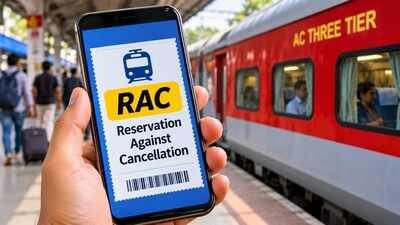
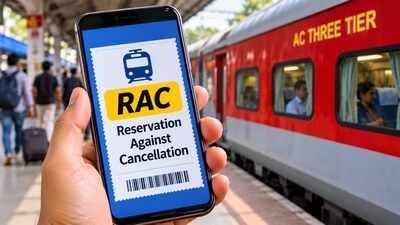
Indian Railways’ Reservation Against Cancellation (RAC) facility for train passengers may have become redundant with the introduction of digital upgrades to Indian Railways’ ticket-checking system, a section of senior railway officials has argued. The debate comes amid reports that the Railway Ministry is considering discontinuing the facility.
RAC was introduced in 1983-84 by then Railway Minister ABA Ghani Khan Choudhury, who announced the initiative while presenting the Railway Budget in Parliament.
Why was RAC introduced in 1984
Explaining the rationale behind the proposal, Choudhury said a fixed number of berths would be set aside for passengers at the top of the waiting list. This would enable them to receive sleeper berths during the journey if passengers holding confirmed reservations failed to turn up, leaving their berths vacant.
He also maintained that the system had helped prevent railway staff from allotting berths arbitrarily, according to a PTI report.
The Railway Ministry modified the RAC arrangement in 2016 by increasing the number of berths reserved for such passengers. Previously, each sleeper coach had five side-lower berths set aside under RAC, accommodating 10 passengers. The allocation was raised to seven berths, allowing 14 passengers to be accommodated.
The allocation was also increased in air-conditioned coaches. In 3AC, the number of side-lower berths reserved for RAC passengers went up from two to four per coach, increasing the capacity from four to eight passengers. In 2AC coaches, the allocation rose from two berths to three, enabling six passengers to be accommodated instead of four.
Why RAC ticketing may be scrapped
Under the existing RAC arrangement, two passengers share a single berth, even though both are charged the full fare. The system has faced criticism over the years, particularly over concerns about passengers paying the full ticket price despite having to share a berth, as well as the inconvenience this causes.Officials told PTI that when the reservation and ticketing systems were not digitally linked, RAC was a passenger-friendly initiative. However, digital innovations have changed the scenario.
“If a passenger doesn’t turn up, the train ticket examiner (TTE), who carries a Hand Held Terminal (HHT) that is digitally connected to the entire ticketing system, enters the no-show status against that particular berth, and the same berth becomes available for prospective passengers from the next station,” a senior railway official was quoted as saying.
According to the official, doing away with RAC would also limit the possibility of unfair practices by TTEs by reducing the discretion they currently exercise.
It would require them to finish checking tickets without delay and update the system with the “No Turn-Up” status whenever a passenger fails to board. The vacant berth could then be offered for current booking to passengers boarding at the next station.
The official said the Railways no longer incurs a financial loss when passengers fail to undertake their journeys, following changes to ticket cancellation rules in 2015. Under the revised norms, passengers who do not turn up for their journey forfeit the entire fare paid, without receiving any refund.
“The same berth is then offered to another passenger at the full fare. So, even if the seat goes vacant, there is no financial loss to the Railways because it has already collected the fare from the original passenger,” the official said.
“At the same time, the vacant berth would be offered to other passengers at the next station, ensuring that the facility would not go wasted,” he added.Railway officials also highlighted a recommendation made by the Parliamentary Public Accounts Committee for a partial refund of fares paid by RAC passengers.
In its report tabled in the Lok Sabha on February 4, 2026, the committee said charging the full fare to RAC ticket holders who remained in the RAC category even after the reservation chart was prepared, without receiving a full berth, could not be justified.
The panel recommended that the Railway Ministry develop a system to refund part of the fare to passengers who paid the full amount when booking but were not allotted an entire berth. Officials, however, said designing such a mechanism would be complicated because tickets are booked through both online e-ticketing platforms and physical reservation counters.Currently, RAC is not available on Vande Bharat Sleeper trains. Their fares are 30% to 95% higher than those of other trains operating on the same routes.

✍️ Vikrant Kharwar
Vikrant Kharwar is the Founder and Editor of News Us Media. He writes about trending news, sports, entertainment, technology, and viral stories. His goal is to make news simple, informative, and easy to understand for readers across the United States and around the world.