









Meet Hannah Joseph, the Ohio sophomore who pitched a nonprofit helping seniors use technology and won an AI leadership award

That initiative made her the first teenager ever considered for, and honored with, a Cincinnati AI Leadership Award. Hannah Joseph, a sophomore at Indian Hill High School in Ohio, has won the 2026 AI Next Generation Award after pitching her nonprofit, Seniors Go Digital, at Cincy AI Week, Village Press reported. She stood out among…
Read More

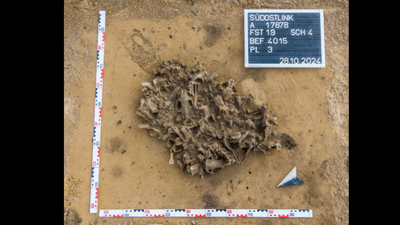
Archaeologists found a 7,000-year-old pit packed with beaver bones; it reveals how Europe’s first farmers used animal fur | World News

PC :State Office for Heritage Management and Archaeology Saxony-Anhalt Archaeologists in Germany have uncovered a Stone Age pit near Alsleben, Saxony-Anhalt, containing the bones of at least twelve beavers, offering an unusually vivid window into how Europe’s earliest farmers exploited animal fur. The roughly 7,000-year-old feature was first unearthed in 2024 during surveys ahead of…

Read More

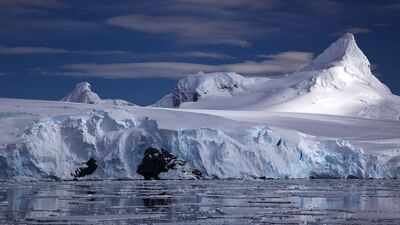
Antarctica’s melting glaciers are leaking toxic mercury into the ocean, which could increase toxic metal levels in the marine food chain and humans |

Tidewater glacier on the Antarctic coast. Image Credit: Jason Auch/Wikipedia Antarctica is releasing alarming amounts of mercury into the surrounding ocean as climate change accelerates the melting of its glaciers. A new study published in the Proceedings of the National Academy of Sciences (PNAS) has found that mercury accumulation in sediments around the Antarctic Peninsula…

Read More

In 2008, Czechia began flooding the lignite mine created after the old city of Most was demolished for coal; by 2014 the pit held 70.5 billion litres of water, forming a 309-hectare lake up to 75 metres deep

The flooding started in 2008, and by 2014 the former mine had filled with about 70.5 billion liters of water, forming a lake 309 hectares in area and a maximum of 75 meters deep. Eventually the lake was opened for public recreation. What does it take to give a landscape carved by decades of coal…

Read More

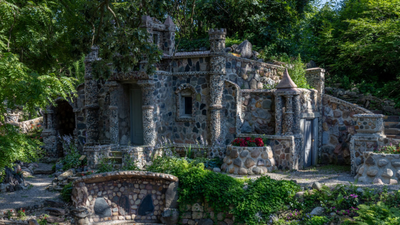
In 1932, an Ohio foundry worker lost his job and began building a rock garden; he spent 12 years creating hundreds of structures, and his wife preserved it for another 53 years

Miniature stone castle and rock structures in Springfield When Harry George “Ben” Hartman lost his job as an iron moulder at the Springfield Machine Tool Company during the Great Depression, he picked up a trowel and began digging a small concrete fishing pond in his backyard. That simple project soon grew across his entire residential…

Read More

Colombian drug gangs recruiting children through social media to pilot explosive drones: Report

HRW report shows that drug gangs and rebel groups in Colombia are increasingly recruiting children Colombian drug gangs and rebel groups are increasingly recruiting children and training them for dangerous roles, including piloting drones loaded with explosives, Human Rights Watch said in a report published Monday.The rights watchdog said armed groups were using social media…

Read More

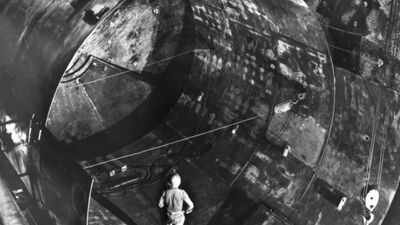
In 2006, South Dakota began turning a mine that produced 41 million ounces of gold into America’s deepest underground lab; today scientists work 4,850 feet down searching for dark matter and neutrinos

Solar Neutrino Experiment 1 used a tank filled with chlorine-based perchloroethylene to detect neutrinos from the Sun. A gold mine in South Dakota once produced millions of ounces of precious metal. Today, the same site is being used to study some of the biggest mysteries in the universe.The Homestake Gold Mine in Lead, South Dakota,…

Read More

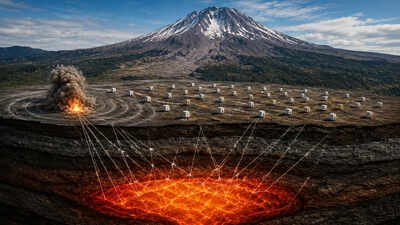
In 2014, scientists set off 23 explosions and deployed 3,500 seismographs around Mount St Helens; the experiment helped image a magma reservoir roughly 4 to 15 km beneath the volcano

Representative Image (AI-generated) Mount St. Helens is one of the most closely studied volcanoes in the United States, but scientists still cannot directly see the complex system of magma and rock hidden beneath it. In 2014, researchers launched an ambitious experiment to change that. According to the Imaging Magma Under St. Helens (iMUSH) project, a…

Read More