







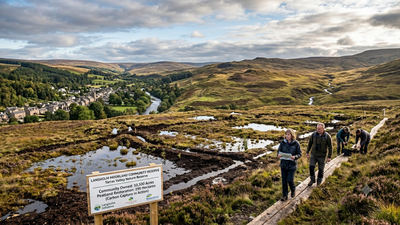
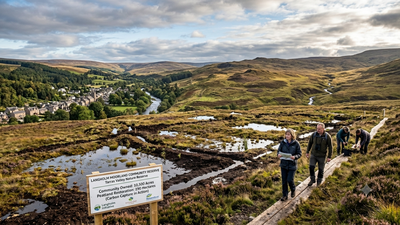
When people in the small Scottish town of Langholm set out to raise £6 million, they were not simply trying to buy a piece of countryside. Their campaign secured 10,500 acres and helped create the community-owned Tarras Valley Nature Reserve, turning an ambitious local vision into one of the region’s largest community-led conservation efforts. Now, that decision is shaping how the landscape is managed. According to Tarras Valley Nature Reserve, more than 190 hectares of degraded peatland at Middlemoss Head are being restored, with work focused on repairing damage that has left parts of the bog dry and vulnerable to erosion.More than 54 kilometres of artificial drains are being blocked, while exposed peat is being repaired to help water return to the landscape. As the ground becomes wetter again, the project aims to create conditions where wading birds, insects and rare plants can return and thrive. For Langholm, the restoration is a chance to turn its remarkable land purchase into lasting environmental change.
Peatland restoration targets 54 kilometres of drains across Middlemoss Head
The Langholm Initiative developed the restoration programme with the Crichton Carbon Centre, a Dumfries and Galloway-based peatland specialist, through Scotland’s National Peatland Action Programme. The aim is not simply to protect what remains, but to reverse some of the damage caused to the peatland over time.Peatlands are particularly valuable because healthy bogs hold water and store carbon. When they dry out, exposed peat can erode and the landscape becomes less capable of supporting the plants and wildlife associated with functioning bog habitats.At Middlemoss Head, the restoration work is designed to change that. More than 54 kilometres of artificial moorland drains are being blocked to raise water levels and help the dried peatland move back towards a wetter, bog-like state. Areas where peat has become exposed will also be restored to reduce further erosion.
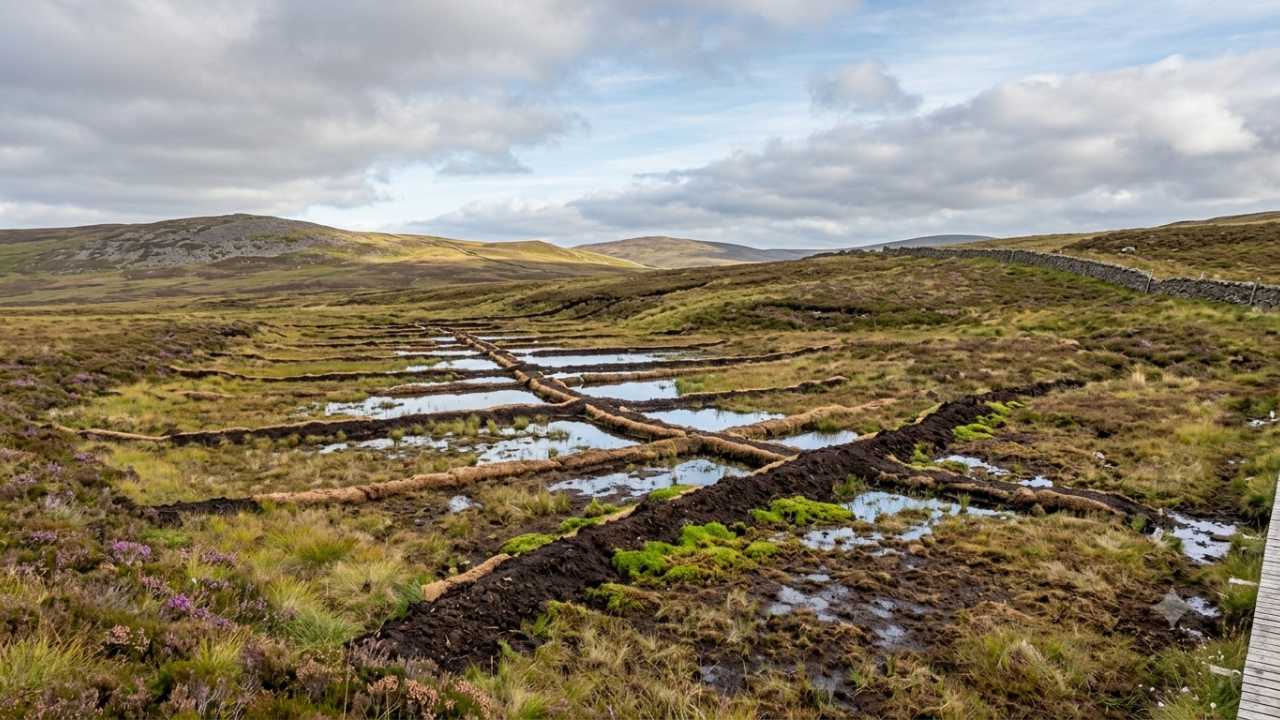
Blocked drains help restore wetlands and support rare species
The changes may look fairly simple on the ground: drainage channels blocked, damaged peat repaired and water allowed to remain in the landscape.But the intention is to create a patchwork of healthier habitats capable of supporting a much wider range of life. The reserve expects the restored areas to benefit wading birds, insects and rare plants as the peatland recovers.The first phase has already shown signs of what that could mean. Peatland ACTION reported in April 2025 that hundreds of small wetland pools had appeared across the restored area after more than 54 kilometres of drains were blocked.The restoration has also involved removing self-seeded, regenerating Sitka spruce from parts of the site, while specialist low-ground-pressure machinery was used to carry out the work without placing unnecessary pressure on the fragile ground.
What started as a land campaign is now helping restore peatland
The restoration is part of the reason the community fought so hard to take ownership of the land in the first place.The campaign began after Buccleuch Estates announced in 2019 that it planned to sell 25,000 acres of Langholm Moor and the Tarras Valley. Local people rallied behind an ambitious idea: rather than see the landscape pass to another owner, they would try to buy part of it themselves and turn it into a nature reserve.The fundraising became known locally as the “impossible dream”. A major public campaign eventually enabled the community to acquire land in stages, with the wider effort ultimately securing 10,500 acres.Peatland restoration was one of the ambitions behind that campaign. The reserve was intended to bring together nature recovery, climate action and community regeneration rather than treat them as separate goals.That makes the work at Middlemoss Head more than a conventional conservation project. The people who helped secure the land are now seeing one of the original promises of the buyout take shape on the ground.
Restoring a landscape the community now controls
Funding for the capital works has come with support from SP Transmission through its Biodiversity Enhancement Strategy. The company has set targets around biodiversity, including achieving no net loss by 2028 and becoming nature positive by 2030.For Langholm, however, the significance reaches beyond those corporate targets. The community takeover transformed the relationship between the town and its surrounding landscape. Land that had once been part of a large private estate is now being managed with nature recovery and local involvement at its centre.The restoration programme is also not intended to be a one-off intervention. The reserve has been developing longer-term plans for additional peatland restoration, with the aim of blocking many more drainage channels across the valley. What started with a fundraising campaign and an ambitious decision to buy thousands of acres has therefore entered a different phase. The challenge now is to give the land time to recover.For Langholm, that means the £6 million community buyout is becoming something tangible: not just land held in local hands, but a landscape being actively repaired for the wildlife and people who depend on it.

✍️ Vikrant Kharwar
Vikrant Kharwar is the Founder and Editor of News Us Media. He writes about trending news, sports, entertainment, technology, and viral stories. His goal is to make news simple, informative, and easy to understand for readers across the United States and around the world.