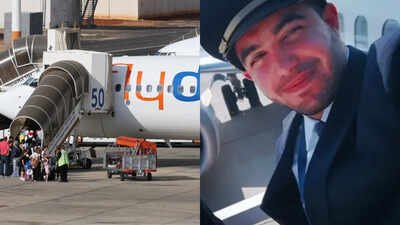









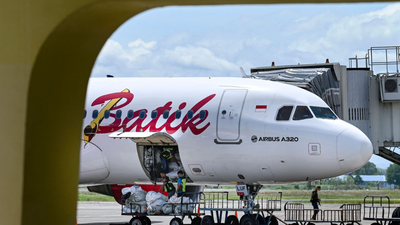
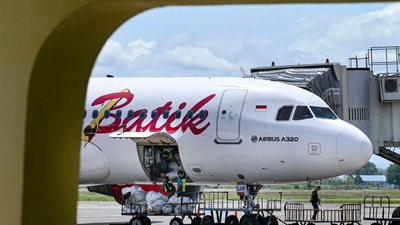
An Airbus A320 carrying 153 passengers was cruising towards Jakarta when an extraordinary lapse in the cockpit left neither pilot awake to monitor the aircraft. Both pilots on the Batik Air flight fell asleep at the same time for about 28 minutes, during which the aircraft drifted away from its intended route. The incident occurred on 25 January 2024, during a two-hour-and-35-minute flight from Kendari in South East Sulawesi to Jakarta. According to the preliminary investigation by Indonesia’s National Transportation Safety Committee (KNKT), the pilots were temporarily unable to respond when Jakarta air traffic control repeatedly attempted to contact them. The aircraft eventually landed safely, with no injuries or damage reported. The incident prompted Indonesian authorities to examine fatigue management and night-flight operations, while Batik Air was strongly reprimanded and the two pilots were temporarily suspended. The case also raised questions about whether routine pre-flight fitness checks can adequately identify fatigue and poor-quality sleep.
How both pilots fell asleep as the plane drifted off course at 36,000 feet
Batik Air flight BTK6723 departed Kendari for Jakarta with four cabin crew members and 153 passengers aboard. About 90 minutes after take-off, the captain asked the second-in-command for permission to rest for a while. The co-pilot agreed and took responsibility for monitoring the aircraft. The arrangement initially appeared routine, but the second pilot was also extremely tired. The Guardian reported that the KNKT investigation found he had been experiencing disrupted sleep after helping his wife care for their one-month-old twin babies. Although he had a substantial rest period before the flight, his sleep quality had been affected by repeated waking. At some point during the flight, the co-pilot also fell asleep. With both pilots unconscious in the cockpit, the aircraft continued flying without active human monitoring for almost half an hour.
Air traffic control could not reach the cockpit for 28 minutes
The situation became apparent when Jakarta air traffic control attempted to contact the aircraft but received no response. The lack of communication continued for approximately 28 minutes. When the captain eventually woke up, he realised that his co-pilot was also asleep and that the aircraft was no longer following the correct flight path. He woke the second pilot, responded to Jakarta air traffic control and corrected the aircraft’s course. The A320 subsequently continued towards Jakarta and landed safely.The incident nevertheless resulted in a series of navigation errors. With 153 passengers and four flight attendants aboard, the potential consequences of the prolonged loss of cockpit monitoring were serious, even though the flight ultimately ended without injuries or aircraft damage. The pilots, who were not publicly identified, were aged 32 and 28. Both were Indonesian nationals.
Both pilots had passed routine medical and fitness checks
One of the striking aspects of the case was that the pilots had not been considered medically unfit before the flight. The KNKT preliminary report states that Batik Air conducted pre-flight health checks that included blood-pressure and alcohol testing. The captain’s blood pressure and heart rate were normal, and his alcohol test was negative, so he was considered fit for flight duty. The second-in-command also held a valid first-class medical certificate without limitations. Reports citing the incident investigation noted that the routine checks did not identify the underlying problem of inadequate-quality sleep. This highlights a difficult problem in aviation: a pilot can pass basic medical checks while still being affected by fatigue that could impair alertness and decision-making. The KNKT report found that Batik Air’s procedures already required crew members to consider factors including fatigue before operating a flight. However, investigators found that the airline’s IM SAFE personal checklist did not have sufficiently detailed guidance explaining how pilots should assess each potential impairment.
The co-pilot’s disrupted sleep became a critical factor
The investigation provided a detailed picture of the second pilot’s circumstances before the flight. He had one-month-old twins at home, and the report said he helped his wife care for them. On a day off before the flight, he woke at about 8am and assisted with the babies. He reported that his sleep quality had deteriorated because he was repeatedly woken during the night. On 25 January, he woke at around midnight to prepare for the flight and travelled to the airport, signing in at the flight operations office at 1:26am. He subsequently underwent the company’s medical examination. The episode demonstrates why fatigue can be difficult to identify through conventional medical screening. Blood pressure, heart rate and alcohol levels can appear normal even when a person’s ability to remain alert has been compromised by poor sleep.
Batik Air already had rules designed to manage fatigue
The KNKT report shows that Batik Air’s operating procedures did contain provisions addressing fatigue. The airline’s manual stated that crew members should not operate a flight if they were fatigued or believed their physical, emotional or mental wellbeing could make them unsafe during the duty period. Its health and medical fitness policy also required crew members to consider factors that could impair human performance, including illness, medication, stress, alcohol, fatigue and emotional conditions. However, investigators identified weaknesses in how these requirements were translated into practical procedures. The IM SAFE checklist existed, but there was no detailed guidance explaining how pilots should assess each category of impairment. The KNKT concluded that this could have made it harder for pilots to properly evaluate their physical and mental condition before duty. The investigation therefore focused not only on the individual pilots but also on the systems designed to prevent fatigue-related incidents.
The cockpit was supposed to be checked every 30 minutes
Another issue identified by investigators involved cockpit monitoring. Batik Air’s safety emergency procedures stated that the cockpit should be checked every 30 minutes. However, the KNKT investigation found that there were no sufficiently detailed procedures explaining who was responsible for carrying out the check or precisely how it should be performed. That gap became particularly significant during the incident because Jakarta air traffic control was unable to reach the aircraft for 28 minutes. A properly implemented cockpit-check procedure could potentially have provided another layer of protection against both pilots remaining asleep for an extended period. The KNKT subsequently recommended that Batik Air establish detailed procedures for implementing cockpit checks and clearly define how the checks should be conducted.
Indonesia ordered a review of fatigue management
The incident prompted Indonesia’s transport authorities to take action beyond the individual flight. The transport ministry strongly reprimanded Batik Air and called on airlines to pay greater attention to crew rest. Indonesia’s air transport director general, Maria Kristi Endah Murni, said authorities would investigate and review night-flight operations in relation to fatigue-risk management for Batik Air and other operators. Batik Air said it operated with an adequate rest policy and was committed to implementing the safety recommendations. The airline also temporarily suspended the pilots involved. Following the incident, Batik Air issued safety reminders to pilots and flight attendants about adequate rest, particularly before early-morning flights. It also reminded pilots to use the IM SAFE checklist and obtain sufficient, adequate and good-quality rest before reporting for duty.
The incident shows why fatigue is different from ordinary illness
The Batik Air case illustrates a challenge that extends beyond one airline or one flight. Fatigue is not always visible, and conventional medical tests cannot necessarily determine whether someone has obtained enough restorative sleep to safely perform a demanding task. A pilot may appear healthy, have normal vital signs and pass an alcohol test while still experiencing severe sleepiness. Aviation therefore relies on multiple layers of protection, including crew-rest requirements, self-assessment, cockpit procedures, air traffic control and communication systems. In this case, several safeguards ultimately helped prevent a catastrophe. Air traffic control noticed the lack of response, the captain eventually woke up, the aircraft’s flight path was corrected and the A320 landed safely. But the 28-minute period in which both pilots were asleep demonstrated how quickly a combination of fatigue, disrupted sleep and procedural weaknesses can undermine those safeguards. The KNKT’s recommendations consequently focused on strengthening the system rather than treating the incident simply as a case of individual pilot error. More detailed fatigue-assessment guidance and clearer cockpit-check procedures could help ensure that pilots are not merely declared medically fit, but are also better equipped to recognise when they are too fatigued to fly safely.

✍️ Vikrant Kharwar
Vikrant Kharwar is the Founder and Editor of News Us Media. He writes about trending news, sports, entertainment, technology, and viral stories. His goal is to make news simple, informative, and easy to understand for readers across the United States and around the world.