








Decades of pollution, untreated sewage, industrial activity and waste have placed heavy pressure on the mangroves around Rio de Janeiro’s Guanabara Bay in Brazil. Yet in one of the bay’s remaining protected mangrove areas, local fishers and conservationists have been working to reverse the damage. Through Projeto UÇÁ, run by the Brazilian environmental organisation Guardiões do Mar, restoration efforts have helped recover 18.2 hectares of mangrove, while more than 64,500 mangrove seedlings have been planted. Monitoring of restored areas has also recorded more than 60 animal species, including birds, mammals and crustaceans. The work goes beyond planting trees, with local fishing communities involved in restoring habitats and removing waste from mangrove areas. The project shows how people whose livelihoods depend on coastal ecosystems can become important partners in restoring them, while the recovering mangroves provide habitat for wildlife and help strengthen the resilience of communities around Guanabara Bay.
How Rio’s damaged mangroves began to recover
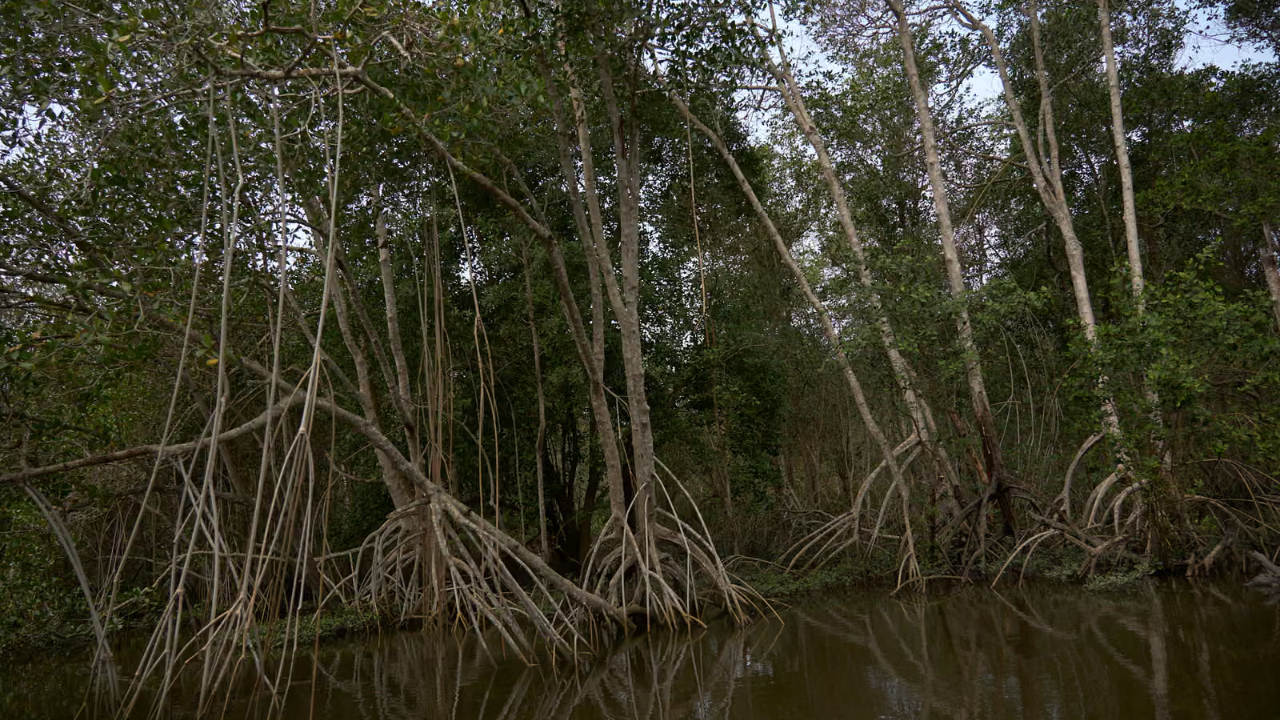
Guanabara Bay is one of Brazil’s best-known coastal environments, but rapid urbanisation and decades of pollution have severely affected parts of its ecosystem. At the northern end of the bay lies the Guapi-Mirim Environmental Protection Area, an important refuge for one of the largest remaining stretches of mangrove in the region. The protected area covers roughly 14,000 hectares and includes around 6,000 hectares of mangrove. Projeto UÇÁ was established in 2012 by Guardiões do Mar to combine mangrove restoration with scientific research, environmental education and community participation. Instead of treating local residents simply as beneficiaries of conservation, the project has involved traditional fishing communities directly in efforts to restore degraded mangrove habitat and protect the ecosystem on which they depend.
Fishers became part of the restoration effort
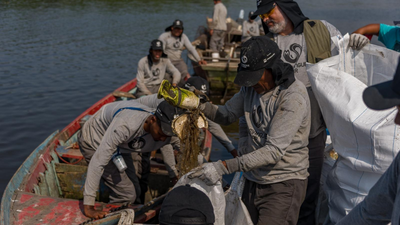
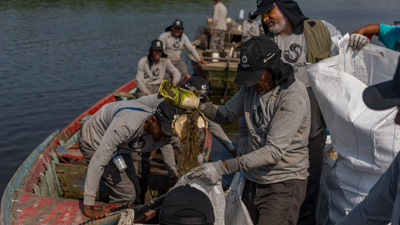
The human story is one of the most distinctive aspects of the project. Artisanal fishers and crab collectors have worked alongside conservationists and researchers to restore mangroves, drawing on their knowledge of the ecosystem and its changing conditions. In areas where mangroves had been damaged, restoration teams used mangrove propagules and seedlings to encourage the forest to return. The cooperation also created opportunities for traditional communities to participate in environmental services and conservation activities. One such programme, known as Operação LimpaOca, involves removing rubbish from mangrove areas while providing payments to members of traditional communities. This means the people who rely on fishing and crab collection can also earn income from helping maintain the ecosystem, creating a direct link between conservation and local livelihoods.
18.2 hectares of mangroves have been restored
Since the project began, restoration efforts have covered 18.2 hectares of mangrove, with more than 64,500 seedlings planted. The work has taken place over several years rather than through a single planting campaign, allowing restored vegetation to develop and become part of the surrounding ecosystem. One particularly important restoration area covers almost 10 hectares within the Guapi-Mirim protected area. According to Projeto UÇÁ, this restored mangrove has developed sufficiently to become visible in satellite imagery and has been monitored for signs of ecological recovery. The project is continuing its work, with its current phase running from 2024 to 2029 and plans to restore another 20 hectares between 2025 and 2028. This longer-term approach is important because mangrove restoration can take years to produce a mature forest capable of supporting a complex wildlife community.
More than 60 animal species have been recorded
The most striking evidence of the restoration comes from the wildlife using the recovering habitat. Monitoring in a 9.9-hectare area restored in 2015 has recorded more than 60 animal species, including birds, crustaceans and mammals. Researchers have documented animals such as capybaras, lesser anteaters and coatis, while the endangered or threatened mangrove finch has also been observed in the restored landscape. The return and presence of wildlife provides an important indication that restored mangroves are beginning to function as habitat rather than simply appearing as newly planted vegetation. However, it is more scientifically accurate to say that more than 60 species have been recorded in the restored area rather than claiming that every species had disappeared and subsequently returned. The distinction matters because species may move between nearby habitats and use restored mangroves as feeding, breeding or shelter areas.
The fight against waste continues
Mangrove restoration is only one part of the conservation effort because waste remains a major problem around Guanabara Bay. Projeto UÇÁ’s cleanup work has removed more than 50 tonnes of solid waste from mangrove areas, preventing plastic, packaging and other rubbish from remaining trapped among the roots and waterways. The programme has involved traditional communities in collecting and removing waste, turning an environmental problem into an opportunity for local participation. Mangroves are particularly vulnerable to accumulated rubbish because their dense root systems can trap floating debris brought in by tides and rivers. Removing that material helps restore the physical condition of the habitat while reducing the risks posed to animals that live and feed there.The recovery of Guanabara Bay’s mangroves matters far beyond the trees themselves. Mangrove forests provide nursery habitat for fish and crustaceans, support birds and mammals, trap sediments and help protect coastlines from waves and storms. They also store significant amounts of carbon in their vegetation and waterlogged soils. For communities around the bay, healthy mangroves can therefore support both biodiversity and livelihoods. The work in Rio also demonstrates why conservation projects can be more effective when local communities are treated as partners. Fishers possess generations of practical knowledge about tides, waterways, wildlife and seasonal changes, while scientists can provide monitoring and restoration techniques. Together, those approaches have helped turn parts of a heavily pressured coastal ecosystem into areas where mangroves are growing again and wildlife is using the recovering habitat. The transformation is still ongoing, but the 18.2 hectares restored so far offer a measurable example of how damaged coastal ecosystems can be given a second chance.

✍️ Vikrant Kharwar
Vikrant Kharwar is the Founder and Editor of News Us Media. He writes about trending news, sports, entertainment, technology, and viral stories. His goal is to make news simple, informative, and easy to understand for readers across the United States and around the world.