







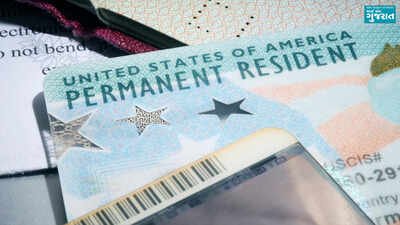
Prove you won’t take government benefits: US issues details of new Green Card rules coming into effect on September 18

USCIS published details of new Green Card rules coming into effect on September 18, 2026. The US Citizenship and Immigration Services issued new guidelines on Tuesday on how officials would determine if a Green Card applicant would become a burden on the government. “On July 16, 2026, DHS announced a final rule that rescinds the…

Read More

Meet Archishman Dey, the Ohio eighth-grader who tested an air fryer, candle, humidifier, gas and incense; incense produced the most fine-particle pollution

Ohio eighth-grader Archishman Dey’s experiment reveals incense produced the highest PM2.5 pollution among five household sources. (Photo: Society for Science) An eighth-grader from Solon, Ohio, is drawing attention to an often-overlooked source of air pollution – the air inside our homes. Archishman Dey, a student at Solon Middle School, conducted a science project examining how…

Read More

In 1944, a Vermont woman used money meant for a fur coat to buy a 150-acre farm; 20 years later she gave it to Audubon for wildlife conservation | World News

Representative Image of a 150-acre Vermont landscape where a historic dairy farm has become a thriving nature preserve (AI-generated image) In 1944, Christine Hires, a member of the family behind Hires Root Beer, was vacationing in Vermont when she fell in love with the landscape and decided to buy a 150-acre dairy farm in what…

Read More

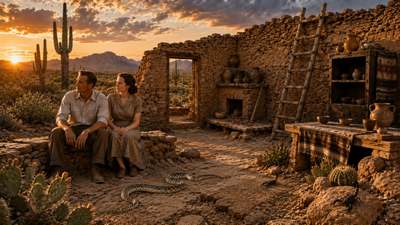
In 1934, an Arizona couple began married life in a roofless pueblo with snakes and scorpions. 11 years later, their story took an unexpected turn | World News

A honeymoon is usually associated with hotels, beaches or at least a room with four walls. For Sallie and Jim Brewer, it was something quite different. In 1934, the newly married Arizona couple arrived at Wupatki National Monument, where their temporary home was part of an ancient pueblo. The building had stood for centuries. Their…

Read More

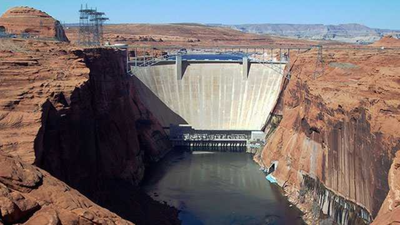
In the 1960s, the US began displacing around 600 families for a 40-mile reservoir; in 1975 the dam was shelved and their land became a 70,000-acre national park

Origin Story: The Tocks Island Dam Controversy The US government once planned to flood a 40-mile stretch of the Delaware River valley to build a massive reservoir, only to cancel the project and turn the acquired land into a sprawling federal parkland.The Delaware Water Gap National Recreation Area, a 70,000-acre national park spanning Pennsylvania and…

Read More

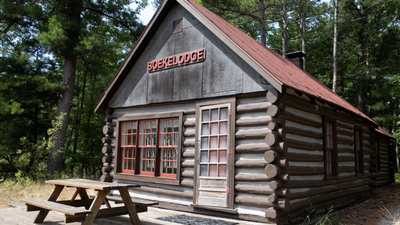
In 1980, Miles Boekeloo sold his 365-acre Michigan wilderness retreat to the National Park Service; the deal let his family keep its cabin and 5 acres for another 25 years

Boekelodge (Image Credit: National Park Service) For decades, Miles Boekeloo and his family used a secluded property along Michigan’s Lake Michigan shoreline as a private wilderness retreat. In 1980, Boekeloo sold the entire 365.48-acre property to the National Park Service, and the historic property, now known as Boekelodge, became part of Sleeping Bear Dunes National…

Read More

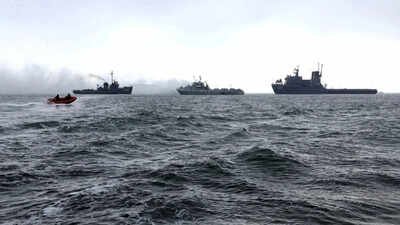
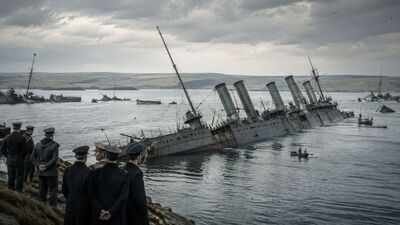
In 1919, German sailors secretly sank 52 warships at Scapa Flow; the wrecks later became valuable for an unexpected reason | World News

When the First World War finally ended, Germany’s powerful High Seas Fleet was not allowed to sail home. Instead, dozens of warships were sent to Scapa Flow in Scotland, where they remained under uneasy Allied supervision while the terms of peace were being decided. Then, on 21 June 1919, the German commander made a decision…

Read More

Blast near Kabul school injures around 50 children; UN condemns ‘heinous’ act

Hand grenade blast near school in Hazara neighbourhood of Dasht-e-Barchi injures at least 50, local media reports A hand grenade explosion near a school in Kabul’s predominantly Hazara neighbourhood of Dasht-e-Barchi injured several children on Monday afternoon, according to Afghan authorities and local media reports.Kabul police spokesman Khalid Zadran confirmed that “a number of children”…

Read More

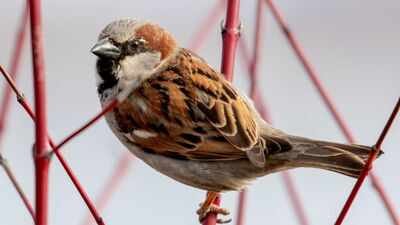
In 1867, Canterbury released 40 house sparrows to eat crop pests; within 15 years New Zealand was poisoning the birds and paying bounties after they began stripping grain crops

The Canterbury Acclimatisation Society liberated 40 sparrows in 1867. (Picture: Birds of the world) The house sparrow was brought to New Zealand in 1867 to help farmers deal with crop-eating insects, but the small bird soon became a problem of its own. Within a few years, while it grew in numbers, it also began damaging…

Read More