





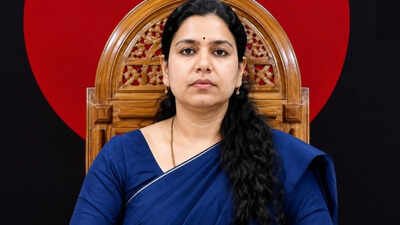
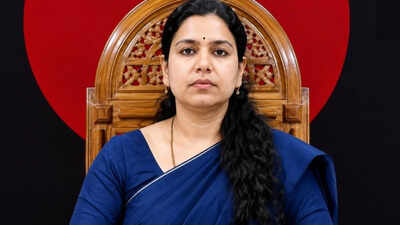
NEW DELHI: Former IAS officer Divya Mittal on Thursday launched the Jan Neeti Bharat party and announced that it would contest the 2027 Uttar Pradesh assembly elections. Her announcement comes nearly a month after she took voluntary retirement from the civil services, ending a 13-year administrative career to pursue politics independently.In a video message on X, Mittal said the party will focus on making people central to policymaking and ensuring that the government remains accountable to them throughout its five-year term, rather than only on election day.“Politics rules over you. In Jan Neeti, you will be the ones who rule,” she said, announcing the party’s name and its decision to contest the state polls due early next year.Her decision to launch a party of her own places her among a group of civil servants who left government service before their scheduled retirement to enter politics.Here are 10 former civil servants who made the transition from bureaucracy to politics before completing their service.
1. Yashwant Sinha
Yashwant Sinha resigned from the Indian Administrative Service in 1984 to enter active politics. He joined the Janata Party and subsequently became associated with the Janata Dal before joining the BJP.Sinha first served as Union finance minister in the Chandra Shekhar government in 1990-91. Under Prime Minister Atal Bihari Vajpayee, he returned to the finance ministry in 1998 and held the portfolio until 2002, when he became external affairs minister.His political career also included membership of the Lok Sabha and Rajya Sabha. Sinha later distanced himself from the BJP and joined the Trinamool Congress in 2021, before contesting the 2022 presidential election as the opposition’s joint candidate.
2. Ajit Jogi
Ajit Jogi left the IAS in 1986 to enter politics and joined the Congress. He had served as a district collector before moving into political life and was subsequently elected to the Rajya Sabha.Jogi’s biggest political breakthrough came in 2000, when Chhattisgarh was carved out of Madhya Pradesh. He became the newly created state’s first chief minister, holding office until 2003.After years in the Congress, Jogi broke away from the party in 2016 and founded the Janata Congress Chhattisgarh, seeking to establish an independent regional political platform.His career stands out as an example of a former administrator moving from district-level governance to the leadership of a newly formed state and later attempting to build a party of his own.
3. Mani Shankar Aiyar
Mani Shankar Aiyar resigned from the Indian Foreign Service in 1989 to enter politics. He had served as a diplomat for more than two decades and spent part of his career on deputation to the Prime Minister’s Office under Rajiv Gandhi.Aiyar joined the Congress and won the Mayiladuthurai Lok Sabha seat in Tamil Nadu in 1991. He went on to become a prominent party leader and served as Union minister for petroleum and natural gas during the UPA government.He also held the panchayati raj portfolio and was involved in efforts to strengthen local self-government institutions.
4. Arvind Kejriwal
Arvind Kejriwal resigned from the Indian Revenue Service in 2006 after working in the income tax department. He had become involved in the Right to Information movement and founded the non-governmental organisation Parivartan to address citizens’ grievances.His political journey gathered momentum during the Ana Hazare-led India Against Corruption movement, which campaigned for a stronger anti-corruption law. In 2012, Kejriwal founded the Aam Aadmi Party (AAP), choosing to build a political organisation rather than join an established party.AAP made its electoral debut in the 2013 Delhi assembly elections, when Kejriwal defeated then chief minister Sheila Dikshit. He became Delhi chief minister in December 2013 and returned to the post after the party’s victories in 2015 and 2020.
5. KJ Alphons
KJ Alphons took voluntary retirement from the IAS in 2006 and entered electoral politics in Kerala. He contested the Kanjirappally assembly seat in Kerala as an independent candidate supported by the Left Democratic Front and won.Alphons later founded the Jana Shakti platform before joining the BJP in 2011. His political journey subsequently took him to Parliament, when he became a Rajya Sabha member.In 2017, he was inducted into the Narendra Modi government as Union minister of state for tourism, with independent charge, and also handled electronics and information technology.His transition from a civil servant known for urban development initiatives to a state-level politician and Union minister is an example of an officer moving across political formations during his career.
6. Satyapal Singh
Satyapal Singh, a 1980-batch IPS officer of the Maharashtra cadre, opted for voluntary retirement in January 2014 while serving as Mumbai police commissioner, ahead of the Lok Sabha elections.He joined the BJP and contested the Baghpat Lok Sabha seat in Uttar Pradesh in 2014, defeating Rashtriya Lok Dal chief Ajit Singh. He retained the constituency in the 2019 general election.Singh served as Union minister of state for human resource development and water resources during the Modi government’s first term. Before entering politics, he had served in several police leadership roles and was known for his work in law enforcement.
7. OP Choudhary
OP Choudhary, a 2005-batch IAS officer, resigned from the service in 2018 while serving as Raipur collector to enter politics. He joined the BJP and contested the Kharsia assembly constituency in Chhattisgarh in the same year.Choudhary lost that election but returned to the electoral contest in 2023, this time winning the Raipur City South seat. He was subsequently inducted into the Chhattisgarh government as a minister.His career highlights the uncertain transition from administration to politics. Unlike officers who win their first election, Choudhary’s initial defeat did not end his political ambitions. He returned five years later and secured a place in the state Cabinet.
8. Aparajita Sarangi
Aparajita Sarangi, a 1994-batch IAS officer of the Odisha cadre, took voluntary retirement in 2018 while serving as joint secretary in the Union rural development ministry.She joined the BJP in November that year and contested the 2019 Lok Sabha election from Bhubaneswar. Sarangi won the seat, defeating Biju Janata Dal candidate Arup Patnaik.She retained the constituency in the 2024 general election, establishing herself as a BJP leader in Odisha.Sarangi’s transition was particularly swift: she moved from a senior central government position to an electoral contest within months of leaving the service and subsequently secured two consecutive Lok Sabha victories.
9. AK Sharma
AK Sharma, a 1988-batch IAS officer of the Gujarat cadre, took voluntary retirement in January 2021, around 18 months before his scheduled superannuation.Sharma had spent a substantial part of his career working in the Prime Minister’s Office and was associated with Narendra Modi’s administration during his tenure as Gujarat chief minister and later as prime minister.After leaving the service, Sharma joined the BJP and was elected to the Uttar Pradesh Legislative Council. He subsequently became a minister in the Yogi Adityanath government, handling portfolios including urban development and energy.His move demonstrated how a senior bureaucrat with experience in the central administration could enter state politics and secure a position in the Cabinet without first contesting a direct assembly election.
10. Asim Arun
Asim Arun, a 1994-batch IPS officer, took voluntary retirement in January 2022 while serving as Kanpur police commissioner. He joined the BJP soon afterwards, ahead of the Uttar Pradesh assembly elections.Arun contested the Kannauj assembly seat and won, entering a constituency associated with the Samajwadi Party. He was subsequently inducted into the Yogi Adityanath government.His political entry came within weeks of his voluntary retirement, making him one of the clearest recent examples of a serving police officer moving directly into electoral politics before the end of his career.
Bonus: K Annamalai
K Annamalai, a 2011-batch IPS officer of the Karnataka cadre, resigned from the police service in September 2019, before completing his tenure. He had served as superintendent of police in Udupi and Chikkamagaluru districts before leaving the force.
Share your thoughts in the comments
Be respectful · TOI community guidelines
He joined the BJP in August 2020 and rose rapidly through the party’s ranks. In July 2021, he was appointed the BJP’s Tamil Nadu president, becoming one of the party’s most prominent faces in the state.Annamalai contested the 2021 Tamil Nadu assembly election from Aravakurichi but lost to the DMK’s R Elango. In the 2024 Lok Sabha election, he contested from Coimbatore but lost to DMK candidate Ganapathi P Rajkumar.In June 2026, Annamalai quit the BJP following differences with the party leadership over its political strategy in Tamil Nadu and launched a new political movement, ‘We The Leaders’. He said the movement would focus on “common man politics”, challenge what he described as “cult and dynastic politics”, and eventually evolve into a political party. He has outlined plans to contest the 2031 Tamil Nadu assembly elections.

✍️ Vikrant Kharwar
Vikrant Kharwar is the Founder and Editor of News Us Media. He writes about trending news, sports, entertainment, technology, and viral stories. His goal is to make news simple, informative, and easy to understand for readers across the United States and around the world.