






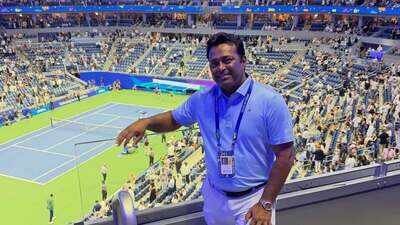
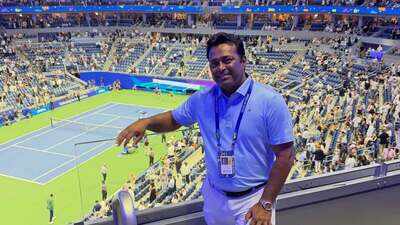
It was in the summer of 1996 that Leander Paes won a historic medal at the Atlanta Olympics, ending India’s 44-year wait for an individual Olympic medal. Paes, then 23, battled through a wrist injury, coming back from a set down to beat Brazil’s Fernando Meligeni in the bronze-medal play-off clash.That day, Aug 3, 1996, the effervescent Kolkatan wrote himself into history, providing the punctuation that ended India’s dismal streak at the quadrennial Games.Thirty years later, he is looking to deliver another winner. As he runs for the office of president of the All India Tennis Association, elections for which is stated to be held later this year, Paes wants to turn around a sports body that has been in the news for playing truant.In New York for the US Open, he spoke to TOI about his plans and goals for Indian tennis.Excerpts…When did you decide to run for AITA presidency?I was always interested in a conversation looking at the betterment of Indian tennis, focussing on greater access for players, access to tournaments and professional coaching, building grassroots programs, infrastructure development across states. I’ve given serious thought to reciprocal programs, using my profile and identity across the tennis world, to give our players exposure to coaching systems in countries that have already done the groundwork.What got me thinking was noticing a certain trend, if you can call it that, over the last 15-20 years. It was our tradition of winning Grand Slams, four of us have won Grand Slams in India — Sania (Mirza), Mahesh (Bhupathi), Rohan (Bopanna) and myself. Between us India has won 38 Grand Slam titles, and also held the No.1 ranking in doubles. Besides, Somdev Devvarman, Sania and now Sumit Nagal is doing inspirational stuff in singles, giving us great results at the Tour-level, Olympics, Davis and Billie Jean King cups, but as I see it, in the last couple of decades, there hasn’t been a maximisation of these results.We have had success, so I ask, what did we do with it? Did we capitalise on it? I feel strongly that the players have not been supported, not those who achieved the results nor those who are trying to forge career paths now.Why did you throw yourself in the race?Over the years, in the last decade or so, I have been approached by different people, be it players, well-wishers of Indian tennis or office bearers of state associations, coming up to me and saying, why don’t you do something for tennis in India? What has been talked about the most is financial transparency, or sadly, the complete lack of it.While I was playing tennis, I was focussed on my career. Most of the last eight years have gone in looking after my parents, who have both passed away in the last one year. Something like this needs time, needs personal investment.So, besides wanting to bring in a professional system to tennis, grassroot programs, access to all, a clear and clean development pathway, and all of this done with transparency, where everything is open and known to all, I want to put players at the heart of tennis. At the end of the day, results speak louder than anything else.I’m happy to use my personal equity, my name, in attracting corporate and government investment to take this dream of all tennis lovers forward.Did you ever speak to your dad, Dr Vece Paes, about running tennis in the country?Dad and I have had many conversations about governance of sport in India, especially AITA. Every time we had these conversations, he would say, you are in a tough position. His argument was, if you don’t take that position, how can you make a difference? But if you do take the position, all your friends, all those who respect and love you for all that you achieved and stood by, will wonder… Also, the minute you take that position, all that you achieved may take a back seat and all the trophies and medals you have worked hard to win may cease to matter because this is a different race, and you might ask yourself, to what end?But, he always said, if you get in, you have to run it as a professional, just like the way you played the sport. Most importantly, you’ve got to bring the best team together, and you’ve got to involve the players.You have to make AITA a professional organization, you have to start by professionalizing it, state by state. To help the game grow, getting hands on involved in the development is not an option.I have so much respect for all our fellow players who struggled, worked hard, and spent their own or family money to stay on tour, pay for their hotel, pay for flights, pay for coaching. Some of them travel with companions or partners, but most of our singles and doubles players are doing all this with zero support.What is your vision for tennis in India for the next 10 years?I’m looking at rounded growth while laying out a business plan for tennis. The sport is played round the year, well almost, globally. I want India to have a full calendar too, men, women and juniors. In the last 10-15 years, we in Asia, and those in the global fraternity, have seen what China has done. In Europe you have seen what Italy, Spain and France have done. We need to have tournaments for players. That’s the ground rule, they shouldn’t have to travel abroad for the bulk of their points.At the end of the day, we are in a system where ranking is king, depending on their ranking a player gets into tournaments, that’s their livelihood. For someone playing World Tennis (ITF) junior events, it is like going to school, exposure at every grade of competition is mandatory, it is the foundation they lay for when they turn pro. I want to focus on a tournament structure that allows players to play a bulk of their tournaments at home, and some in Asia where it is easier to travel. This at the developmental stage, once a player has points, it is easier to get into main draws.The goal is to get approximately 15 singles players into Grand Slams – men and women, get multiple teams into the Grand Slam doubles and mixed doubles.Look at China today, 20 years ago people were saying China is building these tennis schools, all these great stadiums across the country, China is looking at investing millions and millions of dollars into player development, in getting international coaching. I look at the US Open draw now and I see Chinese players across the board. A lot of work has already been done.The other goal I have is to get the administration of AITA to such a level that it sets the standard for other sports associations in the country. I want our past players to get involved in different levels of the game, for example coaching, like Sania and Rohan are already doing. Sport and event management like Mahesh and Vijay have dabbled with, and I have dabbled with.Even get the current players involved, so when we are done we can hand it over to the next generation. There has to be investment by the past, present, and future players, just like there has to be investment by corporate India and investment by the government.How do you plan to go about getting the players together?We begin by having conversations, the players need to come together and work together, this is our sport, we must take ownership of it. Just because we have had differences of opinion, or people live in different countries that doesn’t mean he or she is forgotten. We have to find a way to work together and I’m willing to lead the way, I’m interested in governance, not politics.

✍️ Vikrant Kharwar
Vikrant Kharwar is the Founder and Editor of News Us Media. He writes about trending news, sports, entertainment, technology, and viral stories. His goal is to make news simple, informative, and easy to understand for readers across the United States and around the world.