








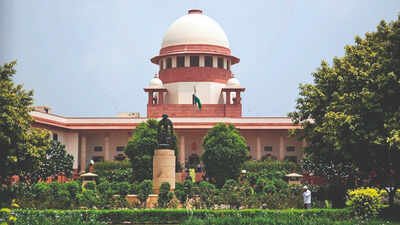
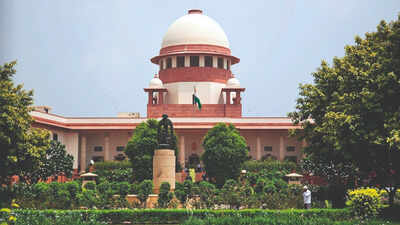
NEW DELHI: The Supreme Court on Saturday declared access to and use of the internet a fundamental right for every individual, including children, under Articles 21 and 19(1)(a) of the Constitution, observing that “The safety of our children and their freedom are not at odds with each other.”The bench of Justice JB Pardiwala and Justice K Vinod Chandran also suggested that children’s online safety should be strengthened through measures such as a ‘child mode’ for social media accounts, rather than denying them access to the internet altogether, LiveLaw reported.A bench comprising Justice JB Pardiwala and Justice K Vinod Chandran made the observations while issuing directions to strengthen mechanisms for detecting and removing child sexual exploitation and abuse material (CSEAM) from social media platforms and other online services.According to LiveLaw, the bench said: “..we have no hesitation in saying that the right to access and use the internet is a fundamental right of every individual under Article 21 read with Article 19(1)(a) of the Constitution. Our children, irrespective of their age enjoy the same rights, and to deny the same altogether would be as absurd as saying children below a certain age do not have a conscience worth protecting or a freedom of speech worth expressing. The safety of our children and their freedom are not at odds with each other. Our children are entitled to both.”Blanket restrictions are not the answerThe bench acknowledged that the internet, in its present form, poses safety risks to children. However, it said restricting children’s access because online platforms had failed to detect and remove harmful material would amount to mistaking the victim for the problem.The court examined whether children should be completely shielded from the internet and social media in the interest of their safety. It noted that the right to freedom of speech and expression under Article 19(1)(a) includes the right to know, receive and impart information and ideas.Describing the internet as a marketplace of ideas, creative expression and information, the court said its value extended beyond the material available online to the opportunities it provided for learning, communication and access to information.“For many children, particularly in remote areas, it is often the only source of learning and information,” the court observed.It also noted that the internet could be particularly important for children with special needs, for whom online platforms might be the only place to find companionship with others facing similar circumstances.
Share your thoughts in the comments
Be respectful · TOI community guidelines
Building on earlier rulingsThe bench referred to the Supreme Court’s 2020 judgment in Anuradha Bhasin v. Union of India, which held that “the freedom of speech and expression and the freedom to carry on any trade or business through the medium of the internet is constitutionally protected as a fundamental right under Article 19(1)(a) and 19(1)(g) of the Constitution.”In that judgment, the court had refrained from expressing a view on whether the right to access the internet, by itself, constituted a fundamental right.The bench also referred to the 2025 judgment in Pragya Prasun & Ors. v. Union of India, in which the court recognised the right to digital access as a fundamental right under Article 21.

✍️ Vikrant Kharwar
Vikrant Kharwar is the Founder and Editor of News Us Media. He writes about trending news, sports, entertainment, technology, and viral stories. His goal is to make news simple, informative, and easy to understand for readers across the United States and around the world.