








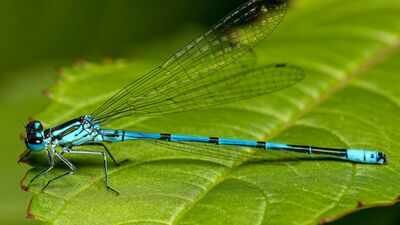
For much of the 20th century, the Santa Cruz River that winds through Tucson, Arizona, existed more as a memory than a living waterway. Groundwater pumping, drought and urban growth drained the riverbed, leaving long stretches of dry sand and scattered pools. Then, in a quiet but transformative experiment, treated wastewater, reclaimed effluent, began flowing into the river at a rate of 2.8 million gallons a day. Within just four months, scientists recorded 37 species of dragonflies and damselfly returning to the channel, a rapid sign that life could come back when water did. As documented by the U.S. Fish and Wildlife Service and researchers at the University of Arizona, this resurgence is reshaping how cities think about rivers, reuse and restoration in the desert.A river that disappearedThe Santa Cruz River has shaped Tucson’s history for thousands of years, supporting Indigenous communities, Spanish missions and later Anglo settlement. But by the mid-20th century, the river was in trouble. Extensive groundwater pumping for agriculture and a growing city lowered water tables. Droughts reduced natural flows. Upstream diversions and channelisation further disconnected the river from its floodplain.By the 1960s and 1970s, long reaches of the Santa Cruz through Tucson ran dry most of the year. What remained were isolated pools, often polluted, with limited habitat for fish, insects or birds. For many residents, the “river” became a dusty wash crossed by bridges, not a living ecosystem.Effluent as an unexpected lifelineAs Tucson grew, so did its wastewater stream. The city’s treatment plants began producing large volumes of highly treated effluent, much of which was used for irrigation, industrial cooling or discharged into evaporation ponds. In the 2000s and 2010s, managers and researchers started asking a different question: could some of this water be used to restore portions of the Santa Cruz?The idea was controversial at first. Some worried about water quality, public perception and the precedent of relying on effluent to sustain a river. But the water leaving Tucson’s advanced treatment facilities is heavily filtered and disinfected, often exceeding the quality of many natural surface waters in the region. Over time, pilot releases showed that the river could handle the flow without creating public health risks, while providing clear ecological benefits.The Response Flows projectBuilding on those pilots, the “Response Flows” project on the Santa Cruz River formalised regular releases of reclaimed water into the riverbed south of downtown Tucson. The U.S. Fish and Wildlife Service, the City of Tucson, the University of Arizona and other partners collaborated to: identify reaches where effluent could safely rewater the channel; monitor water quality to ensure it met strict standards for nutrients, pathogens and contaminants; track ecological responses, including insects, birds, amphibians and vegetation.The target flow was about 2.8 million gallons per day, a modest volume in human terms but transformative in a desert river that had been dry for decades.Dragonflies and damselflies as early indicatorsOne of the first and most striking signs of recovery came from the sky. Dragonflies and damselflies, collectively known as odonates, are sensitive to water quality, flow permanence and habitat structure. They are also relatively easy to survey, making them excellent indicators of ecosystem health.Within four months of renewed flows, University of Arizona researchers recorded 37 species of dragonflies and damselflies along the rewatered reaches of the Santa Cruz. For context, many desert streams support only a handful of species, and some nearby dry washes support none. The rapid return of such a diverse odonate community suggested that:Water quality was sufficient to support aquatic larvae.Flow was stable enough for breeding and development.Vegetation along the banks was responding, providing perching and foraging habitat for adults.A broader biodiversity reboundDragonflies and damselflies were just the beginning. As flows continued, other signs of life appeared:Aquatic insects such as mayflies, caddisflies and beetles colonised the channel.Birds, including herons, kingfishers and swallows, began using the river more intensively for foraging and nesting.Amphibians, such as frogs and toads, were observed breeding in pools and backwaters.Riparian vegetation, including willows, cottonwoods and native grasses, began to green up along the banks.In ecological terms, the river was shifting from a dry, fragmented wash to a functioning corridor that connected habitats and supported food webs.Why this matters for desert citiesThe Santa Cruz experiment has implications far beyond Tucson. Across the arid West, many rivers have been drained, channelised or reduced to seasonal trickles. At the same time, cities are producing growing volumes of treated wastewater as populations increase. Using some of that effluent to restore rivers offers a rare win-win. Like: Cities gain a beneficial use for reclaimed water beyond irrigation or industrial applications; rivers regain flows that support wildlife, recreation and cultural values; and communities get new green spaces that improve quality of life and can help cool urban heat islands.The Santa Cruz shows that even a relatively small, steady flow—2.8 million gallons a day—can trigger outsized ecological responses in a system that has been starved of water for decades.Addressing concerns and challengesUsing effluent to rewater a river is not without challenges. Key issues include: Ensuring consistent water quality, especially during treatment upsets or storms; managing nutrients to avoid excessive algae growth or downstream eutrophication; communicating clearly with the public about what “reclaimed water” means and how it is treated; and balancing effluent use for river restoration with other demands, such as irrigation or groundwater recharge.Partners on the Santa Cruz have worked to address these concerns through rigorous monitoring, transparent reporting and adaptive management. If water quality dips, flows can be adjusted or temporarily halted. If certain reaches show signs of nutrient overload, vegetation and flow regimes can be tweaked.A new identity for an old riverFor Tucson residents, the returning Santa Cruz is changing how they see their city. Sections that were once avoided as dry, trash-strewn washes are becoming places to walk, birdwatch and connect with nature. Schools use the river as an outdoor classroom. Community groups organise clean-ups and restoration days.The river is not “wild” in the traditional sense; its flows are managed, its water is treated effluent, and its banks run through an urban landscape. But it is alive in a way it has not been for nearly 70 years, and that life is visible in the flash of dragonfly wings over the water.Lessons for the futureThe Santa Cruz River’s resurgence suggests a new model for urban rivers in dry regions:Treat wastewater to high standards and use part of it to sustain or restore river flows.Monitor ecological responses closely, using insects, birds and vegetation as indicators.Engage the community so that restored rivers become valued public assets, not just infrastructure.Nearly seven decades after the river ran dry, 2.8 million gallons a day of reclaimed water has brought back not just flow, but a living, breathing ecosystem. In just four months, 37 species of dragonflies and damselflies found their way home: a small but vivid sign that, in the desert, adding water can still mean adding life.

✍️ Vikrant Kharwar
Vikrant Kharwar is the Founder and Editor of News Us Media. He writes about trending news, sports, entertainment, technology, and viral stories. His goal is to make news simple, informative, and easy to understand for readers across the United States and around the world.