








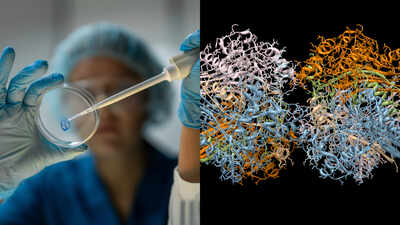
There is an unexpected place scientists are looking for clues to the next generation of infection-fighting drugs: deep in the evolutionary past. At the University of Oregon, researchers reconstructed proteins that existed as far back as 160 million years ago and found that some of their antimicrobial fragments could outperform corresponding versions found in humans when tested against drug-resistant bacteria, states a release shared by Science Daily. The research, published in PLOS Biology on August 25, offers a glimpse into how nature refined its own defence mechanisms over millions of years and how those evolutionary experiments could potentially inform future treatments for infections that no longer respond well to conventional antibiotics.
Searching the mammalian past
The study focused on lactoferrin, an immune protein found in almost every body fluid except blood, including breast milk, tears, saliva and intestinal mucus. One of its best-known functions is to bind iron, effectively depriving bacteria of a resource they need to grow. But lactoferrin has another weapon. Buried within the protein is a short antimicrobial peptide capable of attacking bacterial membranes and creating holes that can damage or destroy microbial cells.Researchers wanted to understand when this ability emerged and how it changed as mammals evolved. Their investigation took them back to the earliest ancestors of placental mammals, a group that eventually gave rise to humans and most mammals alive today.
Reconstructing extinct biology
Using genetic sequences from living animals, including humans and cows, the team mapped lactoferrin’s evolutionary relationships and used ancestral sequence reconstruction to predict what versions of the protein’s genes may have looked like millions of years ago. The predicted genes were then synthesized and used to produce the reconstructed proteins in the laboratory. Researchers tested the resulting antimicrobial peptides against several bacteria associated with human disease, including Pseudomonas aeruginosa, Staphylococcus aureus, Escherichia coli and Streptococcus.The oldest reconstructed peptides could damage bacterial membranes, but the bacteria were often able to repair themselves and survive. As researchers moved forward through evolutionary time, however, the peptides became progressively more potent. Some versions originating from relatively recent mammalian ancestors were even more effective against certain drug-resistant bacteria than the corresponding modern human peptides, the release said.
The power of one small mutation
One of the study’s most intriguing findings was how little genetic change was sometimes required to produce a major difference in antimicrobial activity. Researchers found that a single mutation in the amino-acid sequence could substantially enhance the peptide’s ability to attack bacteria. The discovery highlights how small evolutionary changes can dramatically reshape biological functions over time.For scientists, that makes evolution more than a historical record. It becomes a vast catalogue of natural experiments, preserving evidence of which molecular changes worked and which did not, adds the online release.
A long road to new treatments
The findings do not mean that ancient peptides are ready to replace antibiotics. The researchers note that antimicrobial peptides can be less structurally stable than conventional drugs and may be broken down quickly inside the human body. Their immediate value may instead lie in providing blueprints for new molecules. Looking at the evolution of antimicrobial defenses, the researchers were able to pinpoint structural modifications that have made these peptides more potent and potentially develop treatments that work alongside existing antibiotics.The method could also help scientists predict how bacteria might develop resistance to new antimicrobial agents. Understanding the strengths and weaknesses of these ancient biological weapons could eventually help researchers develop therapies that are more difficult for pathogens to escape. In the escalating war against drug-resistant infections, the past may hold surprising value, not as an ancient medicine waiting to be rediscovered, but as an evolutionary blueprint for designing new ones.Images Courtesy: istock

✍️ Vikrant Kharwar
Vikrant Kharwar is the Founder and Editor of News Us Media. He writes about trending news, sports, entertainment, technology, and viral stories. His goal is to make news simple, informative, and easy to understand for readers across the United States and around the world.