









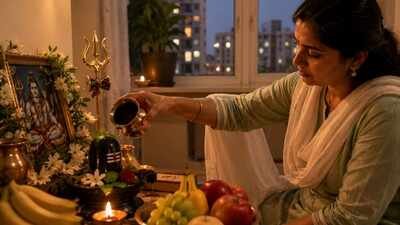
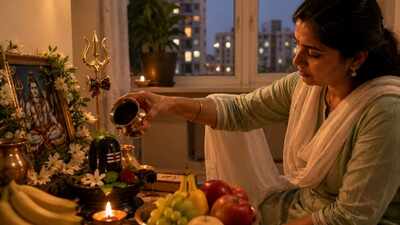
If you’re in Leicester, Edison, Houston, or a Toronto suburb with one temple for half the metro area, Sawan Mondays can feel harder than they should. The month is built around rhythm, Monday worship, simple offerings, Shiva mantra, a sense of return. Diaspora life doesn’t always allow that. Commutes run long. Temple timings clash with work. Children have camps or summer school. And in a small flat, even setting aside a quiet corner can take effort.Still, Sawan Somwar, the Monday vrat or fast observed in the month of Shravana, travels better than many people think.For 2026, the first thing to know is practical, not poetic. Sawan dates are not identical across all Hindu calendar traditions. Several published 2026 calendars place Shravan in North Indian Purnimanta reckoning from 30 July to 28 August. Some South and West Indian traditions, using the Amanta reckoning, begin later, with some sources placing the start on 13 August. That difference matters, because the Mondays you observe depend on the calendar tradition your family follows, and on your local sunrise.So don’t lift a Monday list from an India WhatsApp forward and assume it fits London or New Jersey. Use a city-specific panchang, a Hindu almanac, for your location.Why Monday matters in SawanSomwar, Monday, is traditionally associated with Shiva. During Shravana, that weekly observance gains extra weight in many regional and Puranic traditions. As per widely held devotional practice, devotees offer jal, water, to the Shiva Lingam, a symbolic form of Shiva, chant “Om Namah Shivaya,” and keep some form of restraint through food, speech, or routine.You’ll hear many stories attached to Sawan, including the Samudra Manthan, the churning of the ocean, when Shiva is said to have held halahala, the cosmic poison, in his throat. That’s one reason the month is linked with cooling offerings, prayer, and steadiness. But for most families, the purpose is more direct. You pause one day a week and turn toward Shiva with discipline and simplicity. That can be done abroad. It just looks smaller.The prayers that travel wellIf you don’t have a nearby temple, you do not need to abandon the observance. A home puja, worship ritual, can be very modest.You need a clean surface, a picture or murti, sacred image or idol, of Shiva, or a small Shiva Lingam if you already have one. Add a diya, lamp, incense if your building allows it, water in a small lota, vessel, flowers if available, and fruit. Bilva or bel leaves, sacred leaves associated with Shiva, are traditional and beautiful, but they’re not easy to find in many parts of the UK or US. If you can’t source them, don’t replace them with random leaves and claim equivalence. Offer flowers, water, and sincere mantra instead.A simple home sequence works well. Bathe early if possible. Clean the puja area. Light the diya. Offer water to Shiva. If you have a Lingam placed for regular worship at home, you may perform a gentle abhisheka, ritual bathing, with water. Some families also offer a little milk, but keep it small and respectful. In a diaspora kitchen, waste is hard to justify, and it doesn’t add devotion to pour litres down the sink.Then chant. “Om Namah Shivaya” is enough. So is the Mahamrityunjaya Mantra, a well-known Shiva mantra for strength and healing, if you know it. Read a short stotra, hymn, such as Shiva Chalisa or Lingashtakam, if that is your family practice. Sit for a few minutes after. Silence counts.Fasting abroad, without turning it into a health problemA vrat is a discipline, not a contest. Many people in India already observe Sawan Somwar in different ways, from nirjala, without water, to phalahar, fruit-based fasting, to one simple meal. Abroad, adaptation is often necessary because workdays don’t stop for Shravan.If you’re commuting, working shifts, or caring for children, choose a form you can sustain with steadiness. Fruit, milk, yogurt, sabudana, sago, or one sattvic, simple and pure, meal in the evening are common household patterns. Some people avoid onion, garlic, grains, or regular salt and use sendha namak, rock salt, if available. Others keep the day vegetarian and add extra japa, mantra repetition, if a full fast isn’t possible.Children should not be pushed into fasting. Pregnant people, elderly readers, and anyone with health conditions should not feel pressured to observe a strict food fast. The same applies if you’re on medication or have a physically demanding job. Keep the sankalpa, a conscious vow or intention, in a form your body can carry. This is not medical advice. If fasting affects your health, don’t do it in a severe form.Step 1: Check your city, not just your family WhatsAppBefore the month begins, look up a panchang for your exact city. London is not the same as Birmingham. New York is not the same as California, and Toronto timings won’t match Vancouver. Because Hindu observances depend on tithi, lunar day, and local sunrise, a vrat date can shift outside India. If your mandir, temple, follows a published calendar, compare the two and stick to one system for the month rather than switching back and forth.Step 2: Set up a Shiva corner that fits your actual homeYou do not need a dedicated prayer room. Most diaspora homes don’t have one. Use a shelf, a side table, or a cleared kitchen counter before cooking starts. Lay a clean cloth. Keep a small copper or steel vessel for water, a diya, matches, and your prayer book or phone text ready the night before. On a Monday morning before school runs begin, that preparation makes all the difference.Step 3: Keep the puja short enough to repeatA 12-minute puja done every Monday is better than a 90-minute plan that collapses after one week. Offer water. Offer flowers or fruit. Chant 108 names or 108 repetitions of “Om Namah Shivaya” if time allows. If not, chant 11 times with attention. Bow. Begin your day.If you want a fuller observance in the evening, add Shiva Aarti, a lamp offering, after work. Families with children often find evening puja easier because everyone is home and can join for one bhajan, devotional song, or one short story about Shiva.Finding a pandit in the right timezoneFor Rudrabhishekam, a formal Shiva worship with Vedic chanting, many diaspora families now book online guidance with a pandit, priest, based either locally or in India. Timezone matters more than people expect. A priest in India may be available at what is midnight in Chicago. Before booking, ask four things. Whether they can work in your local timezone. Whether they are comfortable guiding a home puja with limited samagri, ritual materials. Which language they will use. And whether the ritual is meant as a full temple-style ceremony or a shortened griha, home, version.If you prefer in-person worship, check major mandirs in areas with strong Gujarati, Tamil, Telugu, North Indian, and Nepali communities. In the UK, London, Leicester, Birmingham, and parts of the Midlands often have Sawan programming. In the US, New Jersey, the Dallas area, the Bay Area, Atlanta, and greater Chicago often do as well. Smaller towns may only have one Monday evening abhishekam for the whole month, so book leave or plan travel early if it matters to you.What changes and what does notWhat does not change is the heart of the observance. Monday worship of Shiva. Restraint. Prayer. Jal abhisheka, offering water. Mantra. A cleaner, quieter day than usual.What changes is the setting and the scale. You may use tap water instead of Gangajal, water from the Ganga. That is an honest adaptation, not a scriptural equivalent. If you already have a little Gangajal at home, you can add a few drops to regular clean water. If not, offer clean water with reverence. You may worship a picture of Shiva because a Lingam is not available. You may do a brief home puja because the nearest temple is 70 miles away. You may keep a partial fast because your workday won’t allow more.These are adjustments to circumstance. They are not lesser in sincerity, but they are adaptations. It’s better to name that plainly than pretend every substitute is identical.When the temple is far, keep the rhythm closeSawan Somwar is one of those observances that survives because it is repeatable. Not grand, repeatable. That is why it stays alive in diaspora homes.On the Sunday before the first Monday, open your local panchang, mark the dates your family will follow, soak the sabudana if that’s your fast food, and place a small lota beside the lamp. When Monday morning comes, the house may still be cramped, the train may still be late, and the nearest temple may still be across the city. You’ll still have water in your hand, Shiva’s name on your lips, and one quiet corner before the day begins.

✍️ Vikrant Kharwar
Vikrant Kharwar is the Founder and Editor of News Us Media. He writes about trending news, sports, entertainment, technology, and viral stories. His goal is to make news simple, informative, and easy to understand for readers across the United States and around the world.