








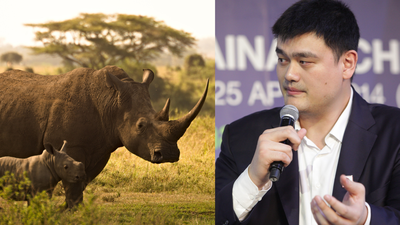
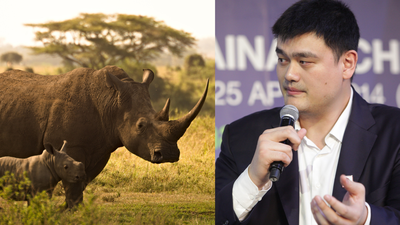
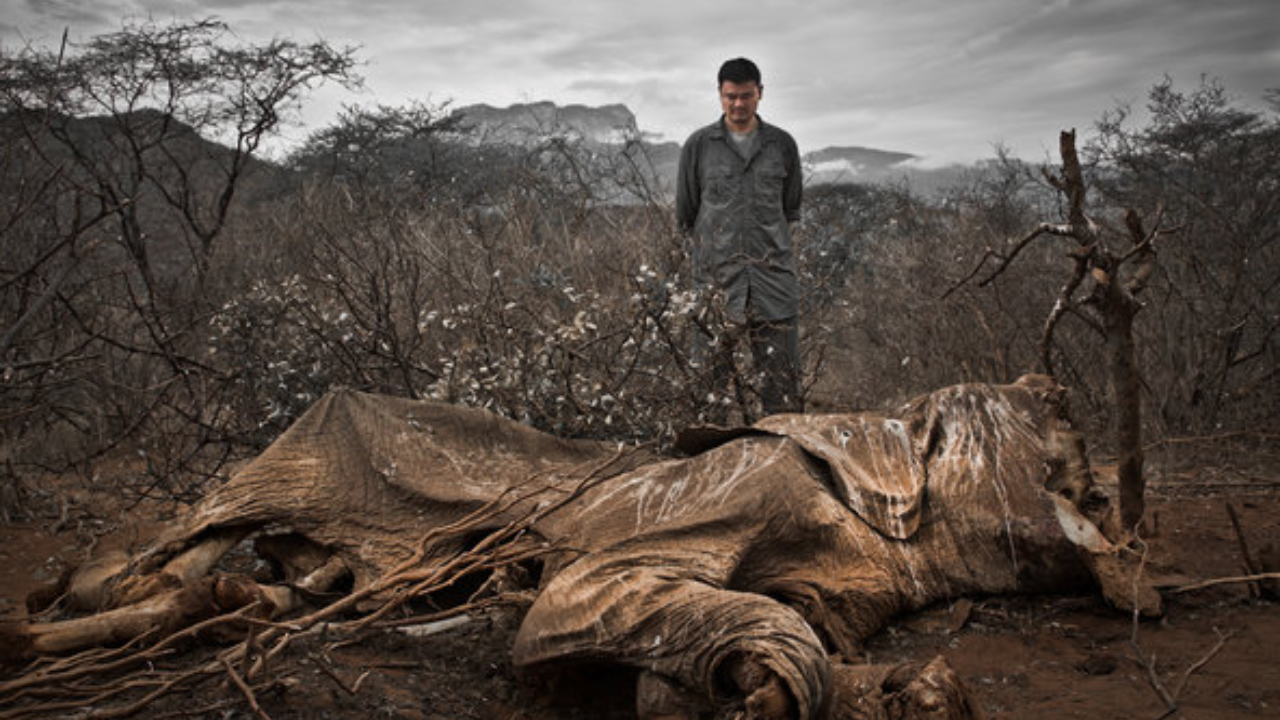
Yao Ming had spent years being watched by millions of people, but nothing in his basketball career prepared him for what he encountered in Africa. In August 2012, the former NBA star travelled through Kenya and South Africa to see the impact of the illegal wildlife trade firsthand. He watched elephants in the wild, then came across the remains of five elephants killed by poachers. Later, he saw a rhino that had suffered the same fate. The scenes gave a human face to statistics about ivory and rhino horn that could otherwise feel distant to consumers thousands of kilometres away. Yao also met conservationists, government officials and children whose education benefited from wildlife tourism. When he returned to China, he carried those experiences into a public campaign against the trade. His celebrity gave the message unusual reach, but it was the animals he had seen that gave him a personal reason to speak.
What Yao saw in Africa turned a wildlife campaign into a deeply personal cause
Yao’s journey in August 2012 lasted 12 days. It was not simply a wildlife tour. He was there to document the threats facing elephants and rhinos and to understand the people dealing with them on the ground.In Kenya, he saw elephants before encountering the remains of five that had been killed by poachers. In South Africa, he came across a rhino that had suffered the same fate. The contrast was difficult to ignore: living animals on one part of the journey, carcasses on another, with the demand for their body parts connecting the two.He also met children whose schooling benefited from income generated by wildlife tourism, as well as conservation workers and government officials involved in protecting animals from poachers.The material gathered during the trip was later used in a documentary project and in public service announcements aimed at Chinese audiences.
PC: WildAid
Why many people misunderstood the ivory trade
The campaign came at a time when elephant poaching had become a serious concern across parts of Africa. According to the African Wildlife Foundation, the information released with the campaign estimated that more than 25,000 elephants were being killed for ivory each year, with levels approaching those seen before the international ivory trade ban introduced in 1989.China was a particularly important part of the discussion because of its ivory market. Although international trade in ivory was prohibited, a one-off legal sale in 2008 had created a regulated market in China and Japan. Conservation groups said the system was being exploited to conceal illegal ivory.A survey commissioned in late 2012 offered another problem. Awareness of the poaching crisis did not necessarily match the scale of the trade.The survey, carried out in Beijing, Shanghai and Guangzhou among almost 1,000 people, found that more than half of those questioned did not believe elephant poaching was common. About a third thought ivory came from elephants that had died naturally. Only 33 per cent identified poaching for tusks as the reason elephants were being killed.Yet there was considerable support for government action. Ninety-four per cent of those surveyed agreed that the Chinese government should ban the ivory trade.
Many buyers still believed rhino horn had special uses
The situation surrounding rhino horn had its own complications. A separate survey in the same three Chinese cities found that two-thirds of respondents did not know that rhino horn was obtained from poached animals. Almost half believed it could be legally bought through official shops.The findings also pointed to misconceptions about why people wanted the product. Traditional Chinese medicine had officially removed rhino horn from China’s pharmacopeia in 1993, but demand had not disappeared. Some consumers continued to associate it with supposed medicinal or sexual properties.Rhino horn was also being treated by some buyers as an investment or used for ornamental carvings.According to the African Wildlife Foundation, South Africa had recorded 668 rhinos killed by poachers in 2012 alone, according to the campaign material. The figures illustrated how quickly the illegal trade had grown and why conservation organisations were trying to address not only poaching in Africa but demand in Asian markets.
Why Yao Ming was the right voice for the campaign
The choice of Yao as the public face of the campaign was not accidental. He had already become involved in a high-profile effort to reduce the consumption of shark fin in China through WildAid.That earlier campaign gave conservation groups an example of what a recognisable Chinese celebrity could do when the message reached a mass audience.The organisations involved in the ivory and rhino campaign included WildAid, Save the Elephants, the African Wildlife Foundation and the Yao Ming Foundation. Their approach relied heavily on public education rather than presenting the issue solely as a distant conservation problem.Yao’s role was particularly useful because he could speak directly to Chinese consumers in a way that international conservation organisations could not always replicate.The campaign materials showed what he had seen in Africa and connected those scenes with the products appearing in markets thousands of kilometres away.
The impact of poaching reached beyond the animals
There was also a human cost to the decline of wildlife populations. During his visit, Yao saw how tourism linked wildlife to local communities. He met schoolchildren whose education was supported by revenue associated with wildlife tourism. For conservationists, protecting elephants and rhinos was therefore tied to more than keeping animal populations alive.Poaching could undermine tourism, threaten livelihoods and make already difficult conservation work more dangerous.That point became part of Yao’s public message. After seeing the consequences personally, he argued that consumers who understood how ivory and rhino horn were obtained would be less likely to purchase them.It was a shift in emphasis. Rather than treating poaching as something that happened in distant national parks, the campaign tried to make the connection between a purchase and the killing of an animal easier to understand.
A visit to Nairobi brought the campaign closer to home
During the filming of the documentary project, Yao also visited the Nairobi Nursery run by the David Sheldrick Wildlife Trust, where he met orphaned elephants and the people caring for them.Among them was Kinango, a calf only around two weeks old at the time. The encounter gave him another view of the same crisis. A young elephant was being cared for after losing its family, while only days earlier Yao had seen the bodies of elephants killed for their tusks.The two experiences were not presented as separate conservation stories. They were part of the same reality.The nursery showed what happened after elephants became victims of the ivory trade, while the carcasses he had seen in the field showed what happened before there was an orphan left to rescue.
Conservation groups wanted more than awareness
The campaign was also intended to strengthen pressure for action against the illegal trade.The African Wildlife Foundation was working in important rhino landscapes through measures including aerial surveillance, rapid-response teams and additional personnel on the ground. Its position was that poaching, rather than habitat loss alone, had become a major immediate threat to African rhinos because of demand for their horns in Asian markets.WildAid, meanwhile, pointed to previous instances in which illegal markets had been weakened through a combination of clear laws, enforcement and consumer awareness.The argument was that enforcement could address the people supplying wildlife products, but reducing demand required consumers to understand what their purchases represented.
Yao Ming turned his fame into a message against wildlife crime
Yao had spent much of his career as a sporting celebrity. He was one of China’s most recognisable athletes, and his years in the NBA had made him familiar to audiences well beyond the country.The conservation campaign used that recognition for a subject far removed from sport.Instead of appearing in an advertisement for a commercial product, Yao was asking people not to buy something. His own experience in Africa supplied the central evidence for the message: he had seen living elephants, then seen what happened to others that had been killed for ivory.
The wider lesson was about demand
The campaign’s underlying idea was relatively simple. Poaching in Africa and consumption in Asia were connected parts of the same trade.Stopping the killing therefore required action at both ends. In Africa, conservation organisations and authorities had to protect animals, investigate poaching and intercept illegal shipments. In consumer markets, people had to understand that ivory and rhino horn were not harmless luxury goods detached from their origins.The surveys suggested that public attitudes could move in that direction. Large majorities of respondents supported stronger government action, even though many did not fully understand how the products reached consumers.
Yao Ming turned his fame into a platform for conservation
The campaign marked a notable change in the public role Yao Ming was taking after basketball.His sporting career had given him an enormous audience. The conservation work gave that audience a different subject to consider. His Africa trip allowed him to bring images and first-hand observations from the field back to Chinese viewers who might otherwise have encountered the ivory and rhino horn trade only as consumer goods. The organisations behind the campaign hoped that familiarity could translate into influence.Yao himself framed the issue around what he had witnessed. After seeing poached elephants and a rhino, he said he could not see the products in the same way.

✍️ Vikrant Kharwar
Vikrant Kharwar is the Founder and Editor of News Us Media. He writes about trending news, sports, entertainment, technology, and viral stories. His goal is to make news simple, informative, and easy to understand for readers across the United States and around the world.